The National Museum of Lithuania is the largest historical archive in Vilnius, spread across multiple branches ranging from a 19th-century arsenal building to a hilltop castle tower. Navigating these fragmented sites requires a clear strategy to avoid missing the hidden archaeological wings.
The main exhibition building lacks an elevator, which presents a serious physical challenge for visitors with strollers or mobility issues. The admission is among the most affordable in the city, making it an excellent stop for anyone interested in authentic artifacts over digital installations.
Practical Information and Logistics
Entrance Fees and Opening Policies
Paying the €5 admission fee grants access to the main New Arsenal building. Students with valid identification enter for just €1.50. Timing your visit strategically saves money. Arriving on the last Sunday of the month allows you to explore the entire collection entirely for free.
Holders of a valid Vilnius City Card can enter the National Museum of Lithuania without paying the standard €5 admission charge. You simply show your card at the ticket desk to receive your entry. Be aware of sudden schedule changes during the summer months and national holidays.
The administration occasionally closes the main halls without updating the information across all branches. Checking the official schedule locally before arriving prevents unnecessary frustration.
How to Navigate to the New Arsenal
The entrance to the main exhibition sits directly in front of the King Mindaugas monument. Reaching this spot by public transport is straightforward. Get off at the King Mindaugas stop using trolleybuses 2, 3, 4, or 17. Alternatively, the Arkikatedros stop serves bus lines 10, 11, and 33.
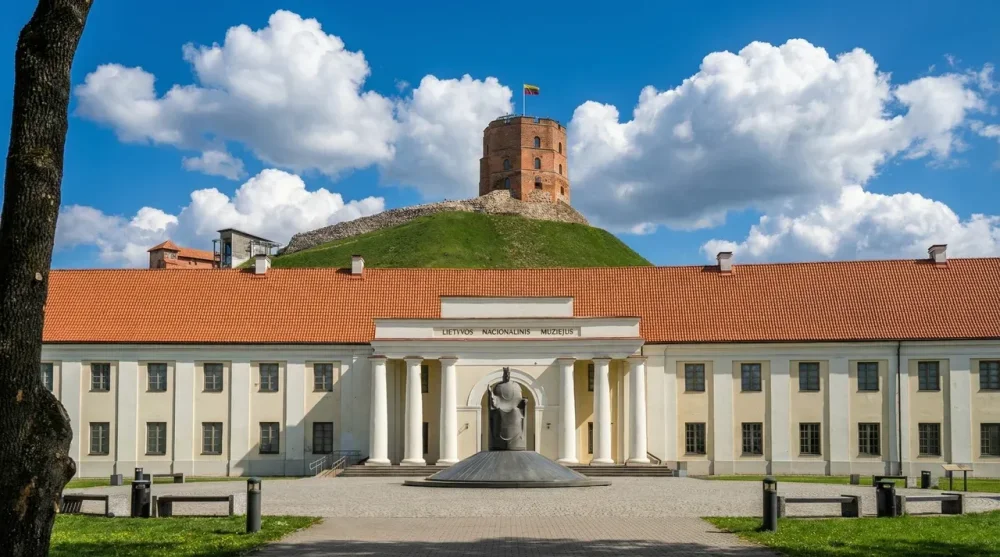
For visitors driving to the center, the closest paid parking area is located at T. Kosciuškos St. 1a. Keep in mind that the archaeological artifacts from the Stone Age are actually stored in a completely separate building to the left of the main entrance. You easily miss this section if you do not know exactly where to look.
What to See Inside the Main Exhibition
The Museum Within a Museum Experience
Stepping onto the first floor instantly transports you back to the atmosphere of the Vilnius Antiquities Museum from 1855. The air is heavy with history, the layout remains purposefully old-fashioned. Genuine artifacts sit inside their original glass casings.
The lighting is tasteful, casting deep shadows across the vast rooms. This specific curation style highlights an impressive reconstruction of the Grunwald Battle. Take your time examining the intricate details of the weaponry and armor displayed across the hall.
Surviving the 19th Century: Artifacts of Oppression
The second floor shifts the focus toward the survival of Lithuanian culture during intense periods of russification and oppression. You will find extensive exhibits detailing the printing bans and the harsh deportations. There is a distinct lack of modern interactivity here.
Instead of touchscreens, the story unfolds through a large collection of portraits, traditional regional dresses, and everyday items from the early 1900s. A dedicated kiosk features miniature videos explaining Napoleon's 19 days in the city and the 1863 uprising. All of these displays feature clear English captions. If you enjoy this type of historical exploration, the nearby KGB Museum Vilnius covers the Soviet-era story with similarly authentic exhibition design.
UNESCO Heritage: Lithuanian Iron Crosses
Cross crafting holds a unique place in local history. The adjoining galleries showcase the revered Lithuanian iron crosses in great detail. This specific craft is a UNESCO-acknowledged intangible cultural marvel.
The exhibit explains the deep cultural attitude towards these wooden and iron structures. You walk past rustic interior reconstructions of typical traditional households. The level of care taken to depict everyday life and unique handcraft styles makes this section highly valuable for history enthusiasts.
Gediminas Castle Tower: The Most Popular Branch
The tower offers the most spectacular panoramic view of the city. Reaching the top requires navigating a very steep path with uneven cobblestones and limited handrails. Taking the funicular railway for €1 saves your energy for the exhibitions inside.
Entering the tower itself costs an additional €4. The interior spaces are compact, housing a smaller branch of the national collection. You easily speed through these exhibits before heading to the observation deck for the main attraction. For a deeper look at what awaits at the top, the dedicated Gediminas Tower Vilnius guide covers the full ticketing and access details.
Is the Main Exhibition Worth Your Time?
The overall experience heavily depends on your expectations regarding modern museum design. The curation was done decades ago, meaning you walk through a somewhat monotonous layout of paintings and artifacts. The space feels quite cold during the winter months.
However, the sheer volume of historical data and the extreme affordability make it a solid choice. It offers the best value for money in the city if your primary goal is examining authentic artifacts rather than engaging with digital installations. You get a comprehensive crash course in the nation's past. Visitors who want to round out their Vilnius museum day can also check the Energy and Technology Museum Vilnius for a very different, more hands-on experience.