Norris Geyser Basin is not just another stop in Yellowstone National Park; it is the oldest, hottest, and most dynamic thermal area you will encounter. While Old Faithful gets the fame for punctuality, Norris delivers raw and unpredictable power. You are standing on top of one of the world's largest active volcanic calderas here, and the ground beneath your feet is sizzling.
This area changes daily. A new steam vent might appear overnight, or a clear pool might suddenly turn muddy. This guide helps you navigate the two distinct loops, manage the parking chaos, and understand why the water here looks different from the rest of the park.
Important Logistics Before You Arrive
Norris is located at a major junction between the Mammoth Hot Springs and the Madison junction. This central location makes it a popular stop, which leads to the biggest challenge you will face here: parking.
Parking Strategy: The parking lot fills up rapidly. If you arrive between 10:00 AM and 4:00 PM during the peak season, you will likely find the lot full. You might see cars lined up on the main road.
- Early Morning: Arrive before 9:00 AM to enjoy the steam rising in the cool air without the crowds.
- Late Afternoon: Visiting after 5:00 PM usually guarantees a spot and softer light for photography.
- Overflow Parking: If the main lot is full, there is an overflow area, but be prepared for a longer walk to the trailhead.
Facilities and Safety: You will find restrooms and a small bookstore at the entrance near the parking lot. There are no restrooms on the trails. Make sure you use the facilities before you start walking. Also, the thermal features here are extremely acidic and boiling hot. Leaving the boardwalk is not just prohibited; it is dangerous.
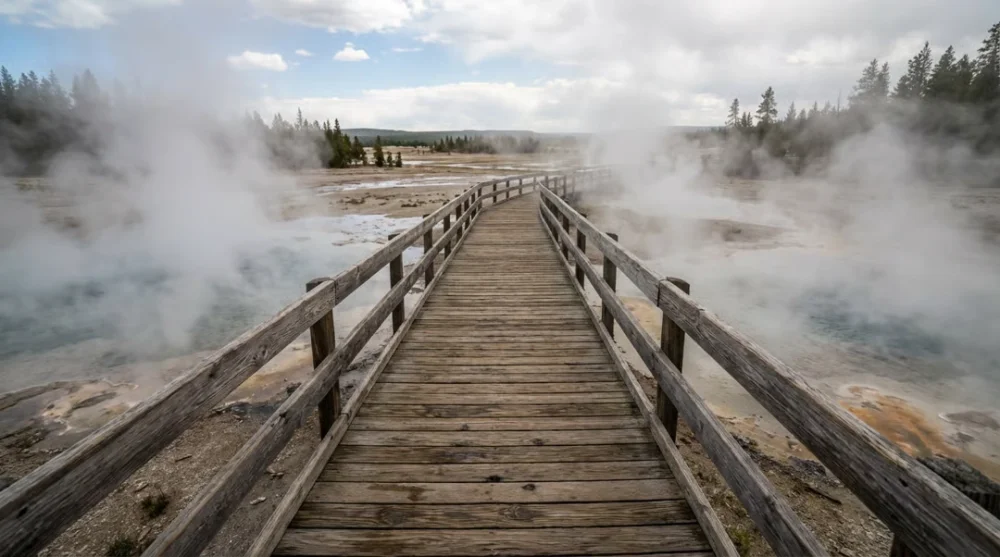
Understanding the Landscape: Two Different Worlds
Norris consists of two main sections: Porcelain Basin and Back Basin. Each offers a completely different experience. You can do both if you have about 2 hours, but if you are short on time, you might need to choose one.
Porcelain Basin: The Sensory Overload
If you want to feel like you have landed on another planet, turn right at the museum and head towards Porcelain Basin. This is a barren, treeless landscape filled with steaming vents and pulsating geysers.
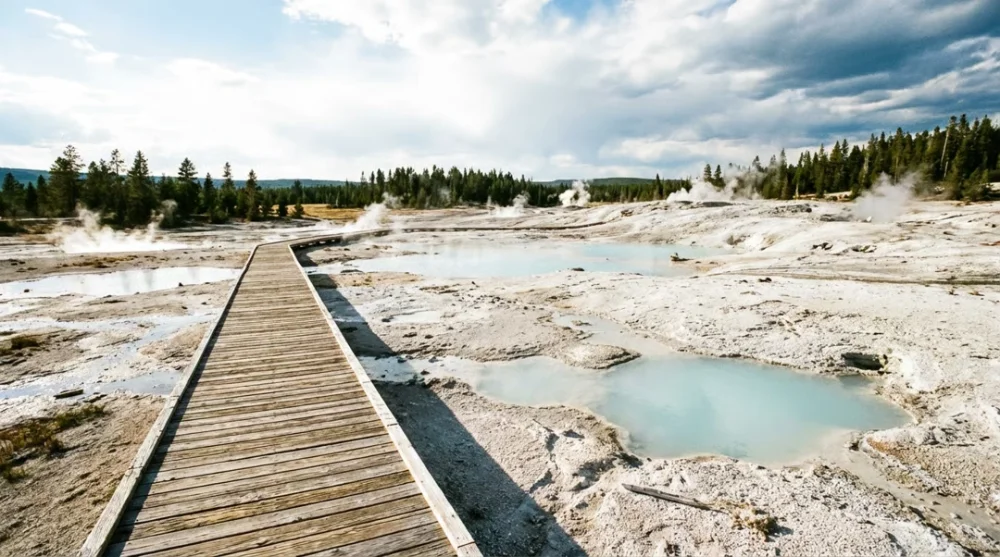
- Distance: Approximately 0.75 miles.
- Terrain: Mostly flat boardwalks with no shade.
- The Experience: The smell of sulfur is strong here. You will hear the hissing of steam vents constantly. The ground is covered in a white mineral called siliceous sinter, which gives the basin its name.
- Key Features: Look for Constant Geyser and Whirligig Geyser. The colors here are vivid milky blues and vibrant greens due to the thermophiles (heat-loving bacteria) that thrive in this harsh environment.
Back Basin: The Forested Giant
The Back Basin loop is longer, more secluded, and winds through a lodgepole pine forest. This area feels more peaceful but holds massive power.
- Distance: Approximately 1.5 miles.
- Terrain: Varied elevation with some stairs and shaded sections.
- The Experience: This trail is less crowded than Porcelain Basin. You walk through the trees and suddenly stumble upon massive geothermal features.
- Steamboat Geyser: This is the world's tallest active geyser. Major eruptions are rare and unpredictable, shooting water more than 90 meters into the air. Do not plan your day expecting a major eruption, as they can be months or years apart. However, even its minor splashes are impressive to watch.
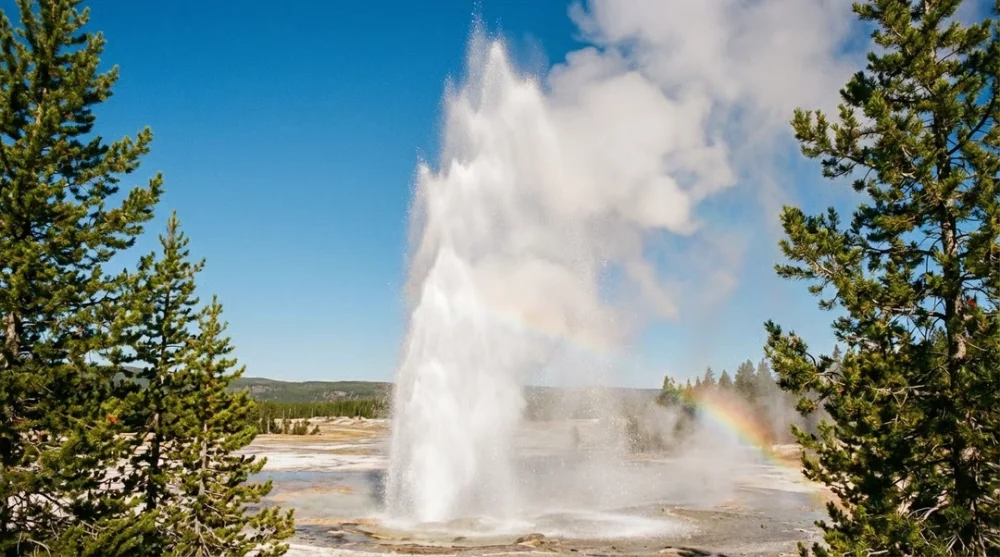
- Echinus Geyser: Known for its acidic water and reddish-brick color around the crater. It used to be very predictable but has become erratic in recent years.
Practical Tips for the Trail
Manage the Heat: Since Porcelain Basin has zero shade, the sun reflects off the white ground and intensifies the heat. Even if the air temperature is mild, you will feel hotter on the boardwalks. Bring water and wear a hat.
The Smell Factor: Norris is famous for its pungent aroma. The mix of sulfur and other gases creates a distinct rotten egg smell. It is harmless for most people in the open air, but if you are sensitive to strong odors, you might want to keep your visit shorter.
Timing Your Visit: A full tour of both basins takes about 2 hours at a moderate pace. If you are rushing, the Porcelain Basin loop gives you the most concentrated views in about 45 minutes.
Why the Colors Are Different
You will notice green and orange ribbons in the runoff channels. These are mats of microorganisms. In the summer, the chlorophyll makes them green. In the winter or when the water is extremely hot, they might turn orange or brown. The water at Norris is acidic, unlike the alkaline water in the Upper Geyser Basin (where Old Faithful is), which allows different types of life to flourish and creates unique color palettes.
Enjoy the raw energy of Norris. It is a place that reminds you that the earth is very much alive beneath your feet.




![Tennessee Aquarium Guide: Tickets, Parking & Tips [year]](https://www.rotasenin.com/uploads/2026/01/tennessee-aquarium-chattanooga-things-to-do.webp)
Comments (0)
Sign in to comment
Report