The Basilica Cistern is one of those rare places where you can escape the chaotic energy of Istanbul and find yourself in a completely different dimension. This ancient structure, built 2026 years ago to supply water to the city, pulls you in not just with its engineering brilliance but with its mystical atmosphere.
Walking through the corridors with its new identity after the restoration, get ready to hear the whispers of history.
A Sunken Palace Beneath the City
Byzantine Emperor Justinian I had this massive water reservoir constructed in 532 AD. It is not called the Sunken Palace by locals for nothing; the grandeur of the columns truly resembles a palace. This structure, 140 meters long and 70 meters wide, has the capacity to store approximately 80,000 tons of water.
The cistern met the water needs of the Great Palace and its surroundings for centuries. Although it was forgotten for a while during the Ottoman period, it was rediscovered by Petrus Gyllius in the 16th century and has survived to the present day. Today, it might not be a source of drinking water, but it stands as one of the strongest stops carrying the memory of Istanbul.
The Mystery of Medusa Heads
When you walk to the northwest corner of the cistern, two massive Medusa heads will greet you. Why these unique examples of Roman sculpture were placed upside down and sideways remains a great subject of curiosity.
It is believed that such a method was chosen to neutralize the terrifying power of Medusa, who was thought to turn people to stone with her gaze in mythology. Some researchers explain the situation with a more practical reason: these heads were merely reused materials serving as column bases and were placed that way entirely for logistical reasons.
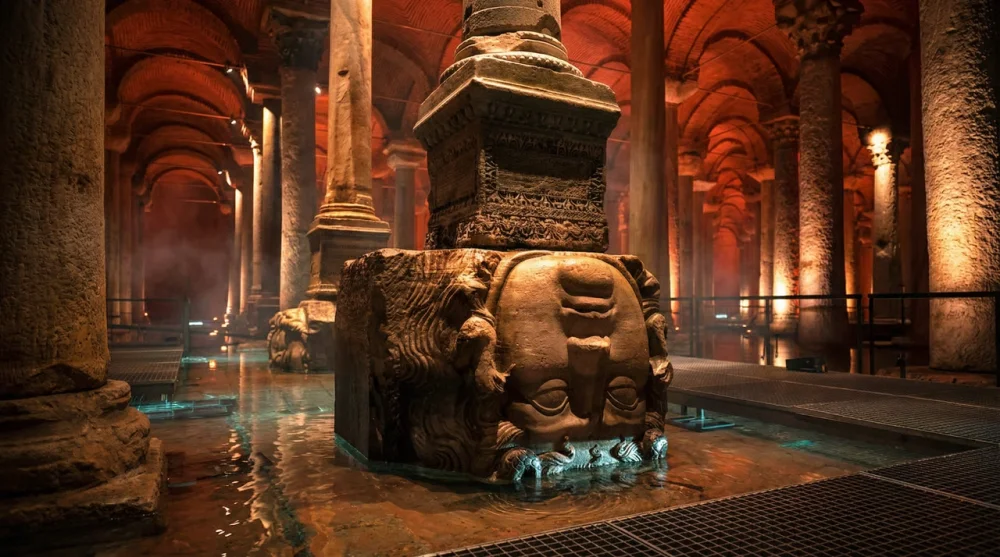
Whichever theory you choose to believe, locking eyes with Medusa in that dim light is a priceless experience.
The New Experience: Light and Art
The major restoration work has completely changed the face of the cistern. You are no longer just touring a historical structure; you are in an interactive exhibition space where modern art intertwines with history. Metal walkways rising above the water level take you on an exploration among the columns.
Thanks to the periodically changing lighting system, the cistern sometimes takes on a deep green and sometimes a dramatic red hue. For photography enthusiasts, capturing this visual feast is guaranteed.
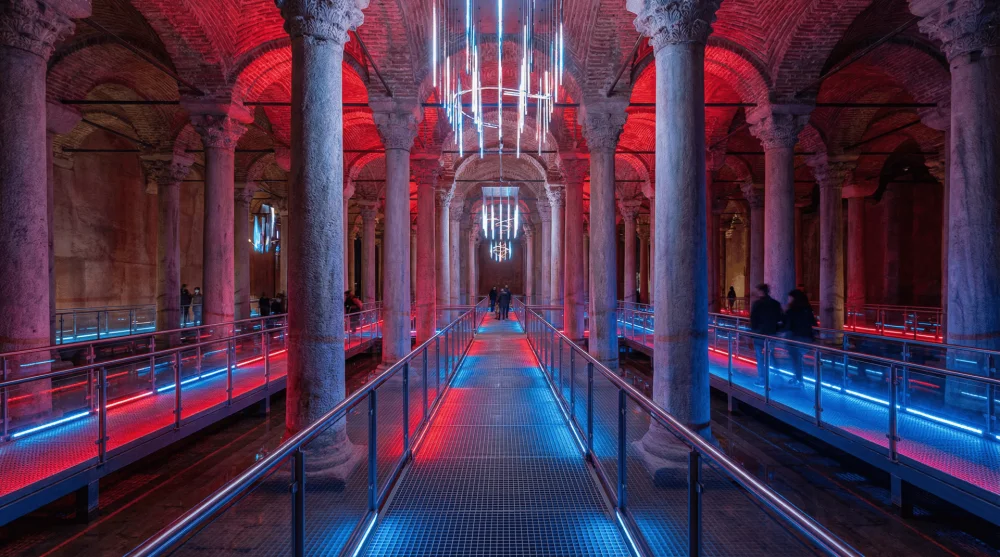
The sculptures and modern art pieces inside have moved the atmosphere of the Basilica Cistern to a much more surreal point, distinguishing it from all other museums in Istanbul.
Night Shift: The Cistern by Night
If you want to escape the crowds and feel the eerie tranquility of the cistern to your bones, give the Night Shift option a chance. In these special sessions starting in the evening hours, the cistern plunges into silence.
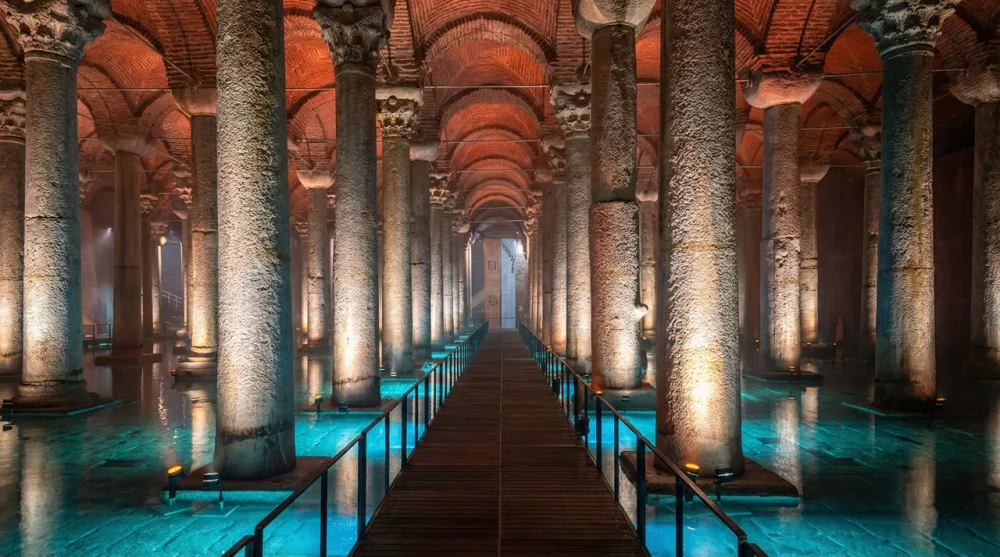
We should remind you that ticket prices for this experience, where you can only hear the sound of water drops away from the daytime chaos, are slightly different from the daytime tariff.
Entrance Fee and Visiting Hours 2026
The cistern opens its doors to visitors every day of the week. Visits start at 09:00 in the morning and continue until 22:00 at night. However, note that there is a short break between 18:30 and 19:30, and the night session starts after this interval.
The most critical point when planning your visit is this: Since this place is not affiliated with the Ministry of Culture and Tourism, the Museum Pass is not valid. You will need to buy a separate ticket at the entrance. Payments are made only by credit card; you have no chance of entering with cash. The entrance fee for international visitors during the day is 900 TL, while the evening session is 1400 TL.
How to Get to the Basilica Cistern?
Reaching the cistern in the heart of the Historical Peninsula is quite easy. Use the T1 Bagcilar - Kabatas tram line and get off at the Sultanahmet stop. After exiting the stop, when you take Hagia Sophia behind you, the entrance to the cistern will appear on your right immediately.
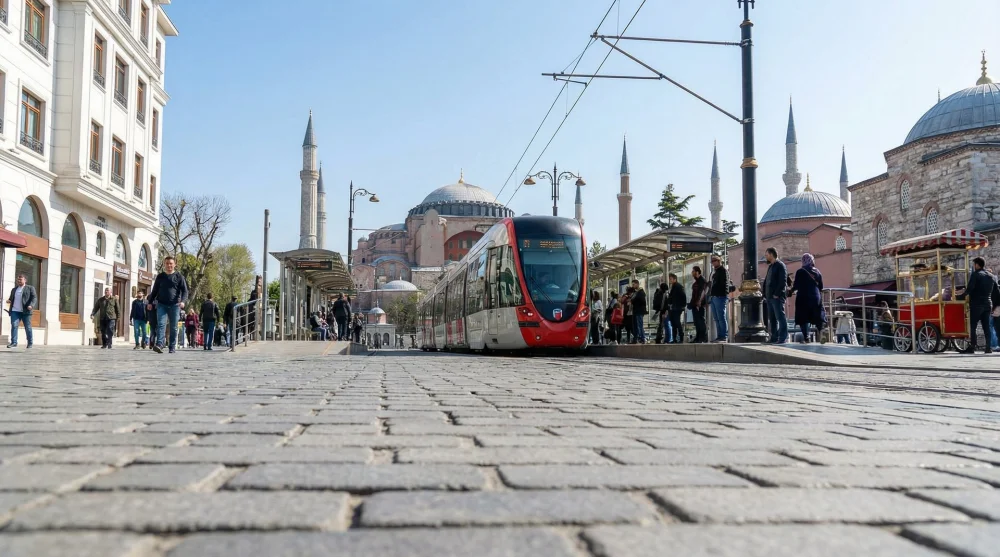
If you are coming from the Asian side, taking a ferry to Eminonu and continuing with the tram is the most logical way. I would say do not bring your private car, because finding a parking space in the region can be a total nightmare.
Critical Tips for Visitors
- Prepare for Humidity: The humidity inside can reach 96%. Be cautious if you have respiratory sensitivities like asthma.
- Protect Your Electronics: Water dripping from the ceiling is quite normal, so it is useful to protect your camera or phone.
- Choose the Right Shoes: The floor can get slippery in places. Choosing sports shoes or flat-soled shoes instead of high heels saves lives.
- Timing: If you prefer the opening hours in the morning or late hours in the evening to avoid crowds, you will tour much more peacefully.

![Seychelles Trip Cost: Detailed Budget Breakdown [year]](https://www.rotasenin.com/uploads/2026/02/self-catering-guesthouse-tropical-garden-veranda.webp)
Comments (0)
Sign in to comment
Report