As you stroll through the winding, narrow streets of Bodrum, you might not realize you are walking over the remnants of one of the greatest architectural achievements in human history. The Mausoleum at Halicarnassus. The name alone likely conjures images of a massive, majestic monument in your mind. However, visiting this site requires a bit of managing your expectations. Rather than a standing building, you are stepping into what feels like a historical detective scene.
If you simply look at the stones and move on, you might be one of those travelers who finishes the tour in 10 minutes and thinks it was not worth the entrance fee. But if you know the story, understand where the marbles have disappeared to, and bring your imagination along, you will deeply feel why this pit was listed as one of the Seven Wonders of the Ancient World.
Why Should You Visit?
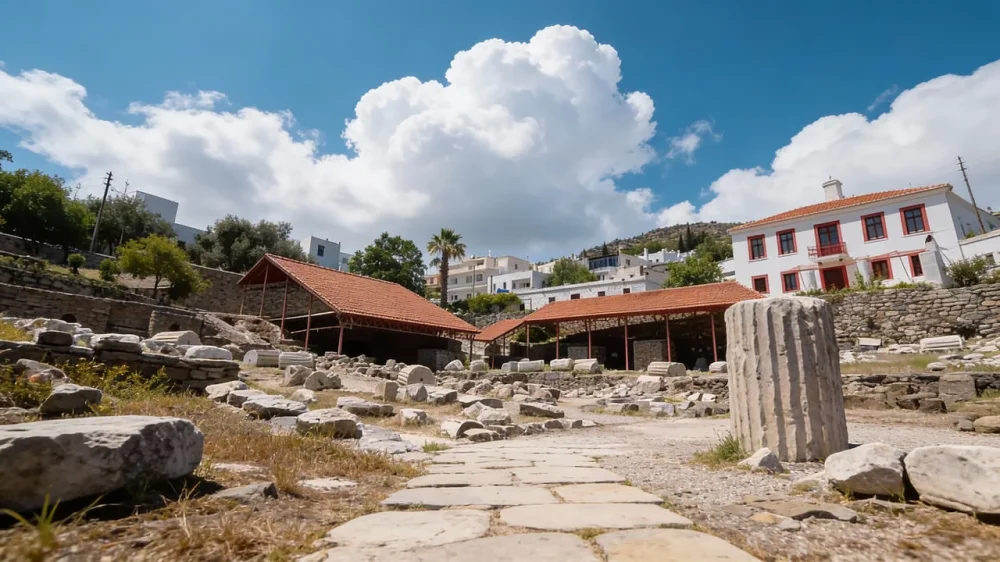
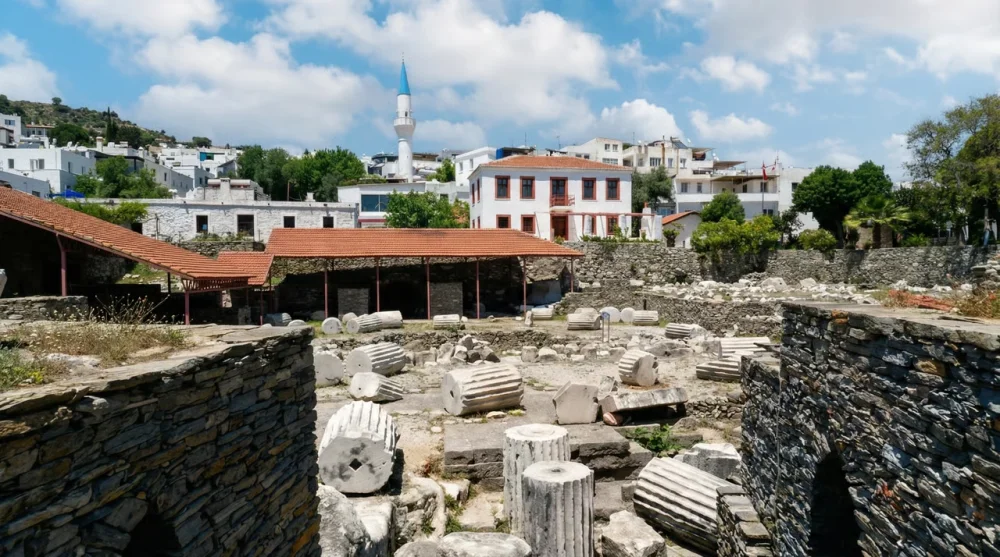
Most visitors experience a moment of shock at the entrance, thinking is this really it? They have a point, as only foundations and a few column fragments remain of the colossal structure that stood for 1500 years. So, why do thousands of people still flock here?
Because this is the birthplace of the word Mausoleum. This monumental tomb built for King Mausolus was so impressive that his name became the generic term for all grand tombs built throughout history. It was a masterpiece where the columns of Greek architecture, the pyramidal roof of Egyptian architecture, and the tomb traditions of Lycian architecture merged into a single body. During your visit, you are not just seeing a ruin; you are witnessing a turning point that changed architectural history forever.
Critical Info Before You Go
I have gathered the most important details you need to know before planning your visit. These tips are especially life-saving during the summer heat.
Entrance Fee and Museum Pass 2026
The Mausoleum at Halicarnassus is an archaeological site managed by the Ministry of Culture and Tourism. Therefore, the Museum Pass Türkiye is valid here, allowing you to skip the ticket line at the turnstiles. If you do not have a pass, you will need to purchase a ticket at the booth. The current entrance fee is 70 TL.
Opening Hours and Best Time to Visit
The museum is open to visitors every day of the week. In the summer season (April 1 - October 1), you can visit between 08:30 AM and 07:00 PM. In the winter season, the closing time shifts to 05:30 PM.
My suggestion is to time your visit for the early morning or late afternoon. Most of the site is open-air, and wandering among those marbles while the Bodrum sun is directly overhead can be exhausting.
The Mausoleum Tour: A Step-by-Step Route
To prevent any confusion once you enter, I am outlining the most efficient route for you. If you follow this order, the stones will turn into meaningful stories rather than just scattered rocks.
Stop 1: Exhibition Hall and Documentary
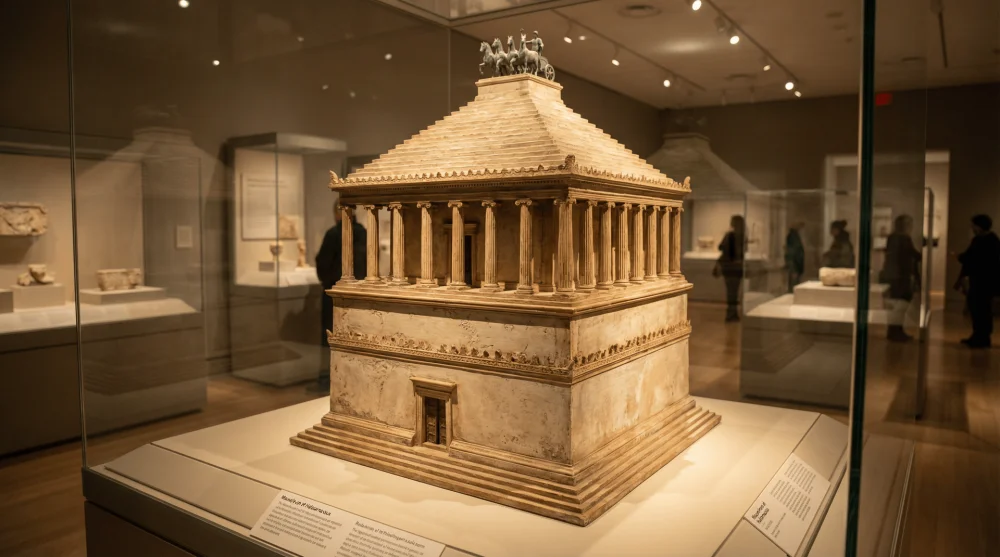
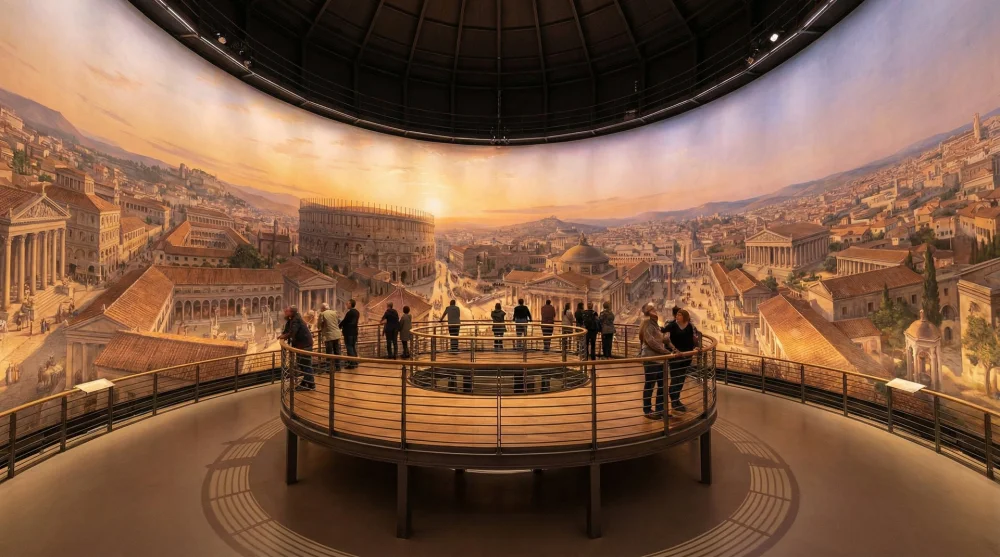
Make sure you enter the covered exhibition hall immediately to your left after passing the turnstiles. This is the most critical part of the trip. Inside, you will find models of the Mausoleum's original form, topographic maps, and a short documentary video explaining the history of the structure.
If you head out to the field without watching this video, what you see will remain merely scattered marble blocks. The video allows you to visualize the magnificence that once rose above that empty space.
Stop 2: The Burial Chamber and Sacred Area
When you leave the exhibition hall and go down the stairs, you will see the massive pit that is the heart of the site. This is the foundation bed of the monument. King Mausolus's burial chamber was carved right into the bedrock at the bottom of this pit.
Try to estimate the scale of the structure by looking at the depth of the pit. The base dimensions were approximately 32x38 meters, and the height reached 55 meters, which is roughly equivalent to a modern 20-story apartment building.
Stop 3: The Open-Air Museum
As you follow the walking path, you encounter architectural pieces that seem scattered around. These are no ordinary stones. Column drums, frieze fragments, and wall blocks... If you look closely, you will notice how precise the marble craftsmanship was.
A Melancholic Story: Where Did the Stones Go?
During your tour, the question how did such a massive structure disappear? will likely occupy your mind. The answer lies in both natural disasters and human hands.
A massive earthquake in 1304 destroyed much of the structure. However, the real blow came from the Knights of St. John who arrived in Bodrum in the 15th century. The Knights used the Mausoleum essentially as a quarry to strengthen the construction of Bodrum Castle. The greenish stones you see in the castle walls today were actually once parts of one of the Seven Wonders of the World.
Even more tragic are the excavations conducted by the British researcher Charles Newton in the 19th century. Newton loaded the most valuable statues, reliefs, and even the colossal statues of Mausolus and Artemisia onto ships and took them to England. Today, those masterpieces are displayed in the British Museum; in Bodrum, only their plaster casts and stories remain.
Location and How to Get There
The Mausoleum is located right in the heart of Bodrum, on Turgutreis Street. If you are near the Antique Theatre, you can reach it in about 10 minutes by walking downhill.
If you are at the Marina or the city center, you need to make a slight climb up the narrow streets from near the Tepecik Mosque. Signs will guide you, but using Google Maps is your best bet.
The Parking Problem
One of the biggest problems in central Bodrum is parking, and the streets where the Mausoleum is located are quite narrow. Do not try to drive right up to the entrance; you will likely regret it. The most logical option is to leave your car in the parking lots near the harbor area or the bus terminal and take a 10-15 minute walk here. This way, you also get to enjoy a pleasant walk among the old Bodrum houses.

![Seychelles Trip Cost: Detailed Budget Breakdown [year]](https://www.rotasenin.com/uploads/2026/02/self-catering-guesthouse-tropical-garden-veranda.webp)
![Best Rides at Disney's Animal Kingdom: Ranked & Reviewed [year]](https://www.rotasenin.com/uploads/2026/02/avatar-flight-passage-banshee-ride.webp)
Comments (0)
Sign in to comment
Report