Vinci is much more than just a dot on the Tuscan map; it is a pilgrimage for anyone fascinated by history, science, and art. Nestled in the rolling hills of the Montalbano region, this small medieval town has managed to preserve the landscape almost exactly as Leonardo da Vinci saw it in the 15th century.
If you are planning a longer Tuscan journey, perhaps after a trip to Pisa, spending a half-day in Vinci is one of the smartest detours you can make. From the church where he was baptized to the olive groves he wandered as a child, here is your complete guide to exploring Vinci.
How to Get to Vinci from Florence and Pisa
Vinci does not have its own train station, but getting here is straightforward if you know the connection points. The gateway to Vinci is the town of Empoli. Whether you are coming from Florence or Pisa, your first step is to take a regional train to the Empoli Railway Station. This ride takes about 30 minutes from Florence and roughly 40-50 minutes from Pisa.
Once you exit the Empoli station, you will find the bus stops right in front or slightly to the side of the station square. Look for Line 49 or Line 52. The ride takes about 20-25 minutes. You should buy your tickets at the station bar or the ticket office before boarding to get the standard price.
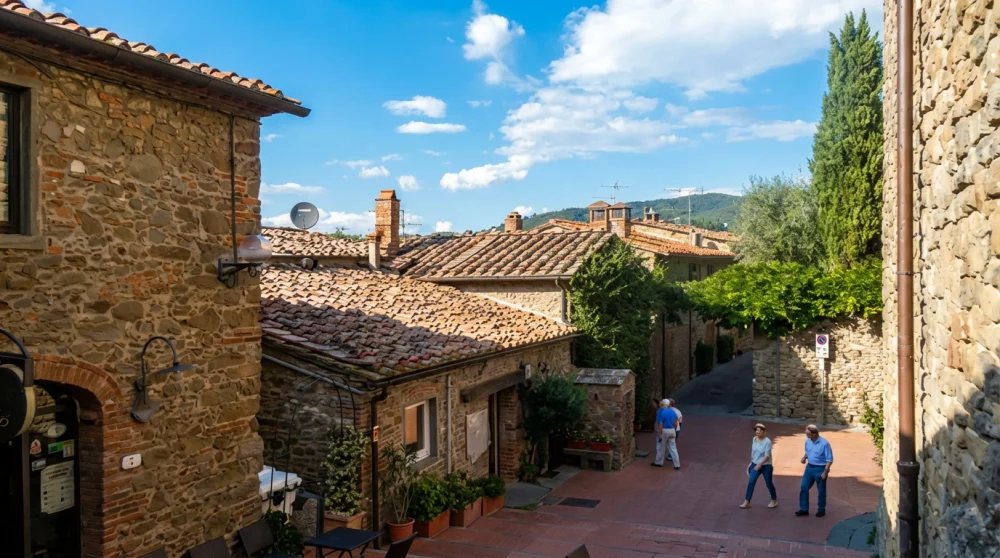
If you buy from the driver, it usually costs more. You will get off at the stop named Grossa-Bvmalbano, but usually, simply telling the driver Vinci is enough, and they will drop you near the castle.
Check the return bus schedule immediately upon arrival. Take a photo of the timetable at the bus stop in Vinci so you do not get stuck later in the day, as buses can be infrequent in the afternoon.
Exploring the Leonardo da Vinci Museum
This is the heart of your visit. The museum holds one of the most extensive and original collections devoted to Leonardo the engineer, architect, and scientist. It is actually split across two different buildings located very close to each other.
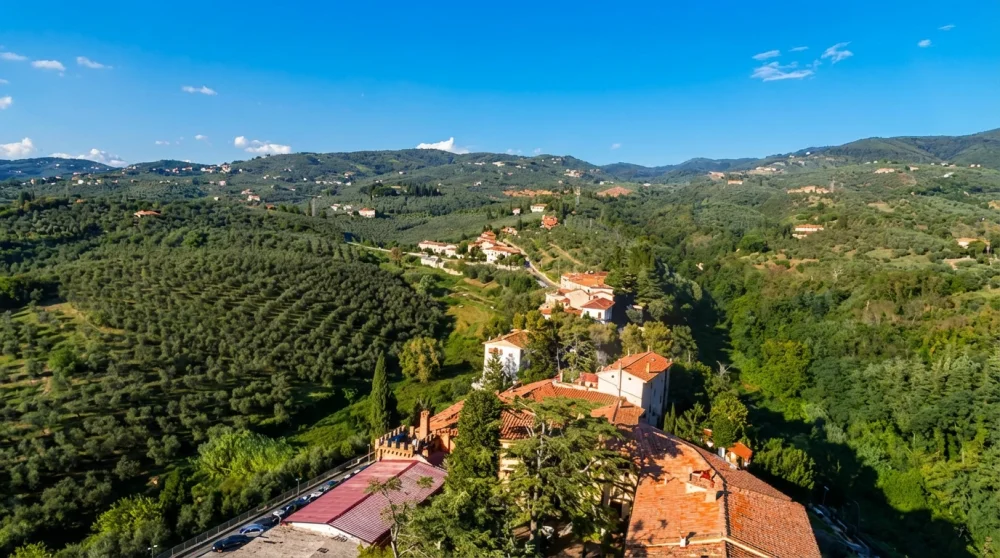
Palazzina Uzielli is dedicated to construction machinery and textile manufacturing technology. Just a short walk away is the Castello dei Conti Guidi. This historic castle houses Leonardo's war machines, flying machines, and bicycle sketches. It also offers a panoramic view of the town from the tower.
If you want to dive deep into the exhibits, tickets, and opening hours, check out our detailed guide on the Leonardo da Vinci Museum.
Piazza dei Guidi and The Vitruvian Man
Before you even enter the museum, you will notice the unique urban layout. The square below the castle, Piazza dei Guidi, was redesigned by the artist Mimmo Paladino with geometric patterns inspired by Leonardo.
Just nearby, you will find the iconic wooden sculpture of the Vitruvian Man (L'Uomo Vitruviano). Created by Mario Ceroli in 1987, this large sculpture stands on a terrace overlooking the Tuscan hills. It is the perfect spot for that classic photo with the valley in the background.
Church of Santa Croce
Located in the town center, this church is historically significant because the original baptismal font where Leonardo was baptized is still preserved here. It is a quick but moving stop to imagine the very beginning of the genius's life.
Visiting Leonardo’s Birthplace in Anchiano
Leonardo was born on April 15, 1452, in a humble farmhouse in Anchiano, a hamlet about 3 kilometers from the Vinci town center. The house itself is simple, but the multimedia exhibits inside bring his childhood to life. More importantly, the location offers silence and inspiration among ancient olive trees.
You can hike the Strada Verde (Green Road), an easy trail through the olive groves which takes about 30-40 minutes, or take the shuttle bus that runs seasonally from the town center.
Practical Tips for Your Visit
The best value is usually the combined ticket, which grants access to both museum buildings and the Birthplace in Anchiano. Keep your ticket safe as you will need to scan it at each entrance. Vinci has several trattorias and cafes. If you have time before your return bus, grab an espresso or a gelato near the castle. Plan for at least 3 to 4 hours to see the museum, the church, and the birthplace without rushing.


Comments (0)
Sign in to comment
Report