Visiting Rome without seeing the Vatican Museums is like visiting Paris and skipping the Eiffel Tower. It is not just a museum; it is a massive complex stretching for miles, filled with some of the most important art in human history. However, I have to warn you: if you go unprepared, you might end up waiting in line for hours under the scorching sun or getting lost in the crowd without seeing the masterpieces.
In this guide, I will share how to navigate the Vatican Museums like a local, not a tourist. You will learn how to skip those infamous long lines, find the strategic shortcuts to the Sistine Chapel, and make the most of your energy inside.
Where are the Vatican Museums and How to Get There?
Although the Vatican Museums are located within the Vatican City State, the entrance is actually on the north side of the Vatican walls, on the Rome side. The biggest mistake most visitors make is confusing the entrance of St. Peter's Basilica with the museum entrance. In reality, there is a 15 to 20-minute walk between the two.
Getting there by public transport is quite easy. If you are taking the Metro, hop on Line A (the Orange Line) and get off at Ottaviano or Cipro stations. From either station, you need to walk about 10 minutes to reach the museum entrance. If you prefer the bus, the number 49 stops right in front of the entrance. Alternatively, you can take buses to Piazza del Risorgimento and walk a short distance from there.
Vatican Museums Tickets and How to Skip the Line
Regardless of the season, a massive crowd forms at the museum gates starting from the early hours of the morning. If you plan to buy your ticket at the door, be prepared to wait in line for hours. The most guaranteed way to avoid this waste of time is to buy your ticket online weeks before your trip.
When you purchase a Skip the Line ticket from the official website or authorized agencies, you can go directly to the security check at your assigned time slot. If individual tickets are sold out, joining a guided tour is another excellent backdoor method. Although slightly more expensive, it allows you to bypass the line and hear the stories behind the artworks, which is definitely worth it.
The museums are free on the last Sunday of every month. However, keep in mind that the crowds are significantly worse on these days. If you want to avoid chaos and have a more peaceful experience, I recommend staying away from the free days.
Critical Rules to Know Before You Go
Since the Vatican is a religious center, it has one of the strictest dress codes in Italy. If your attire is not deemed appropriate at the security check, you will not be allowed inside, even if you have a ticket.
Shoulders and knees must be covered for both men and women. Do not attempt to enter wearing shorts, mini skirts, or sleeveless tops. If you want to wear sleeveless clothes in the summer heat, make sure to carry a large scarf or shawl to cover your shoulders when entering.
What to See Inside: The Highlights
The route inside is generally one-way and eventually leads you to the grand finale, the Sistine Chapel. However, trying to see all 50+ galleries in detail would take days. To use your energy wisely, focus on these key sections:
Pinacoteca (The Art Gallery)
Located on the right side of the escalators after the entrance, this section is often skipped by tour groups but is a must-see for art lovers. Masterpieces by Giotto, Raphael, Leonardo da Vinci, and Caravaggio are exhibited here.
Gallery of Maps
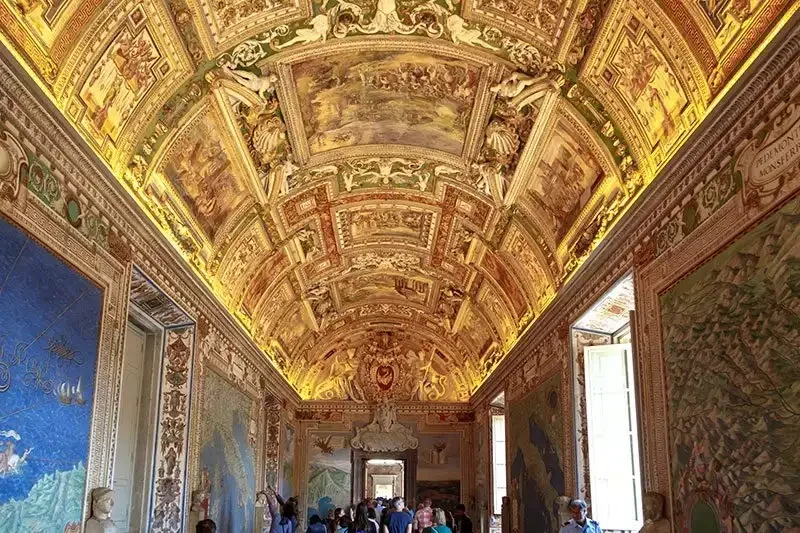
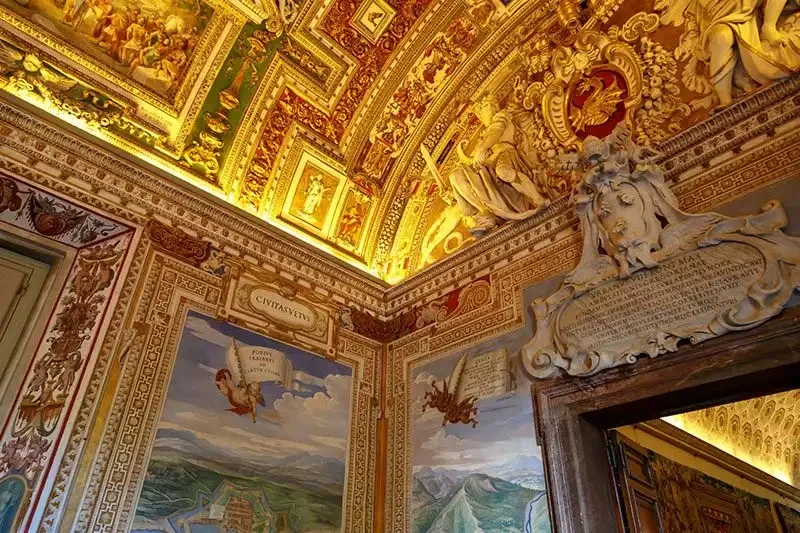
This is perhaps the most photogenic corridor in the museum. As you examine the 16th-century maps of Italy on the walls, you might find yourself unable to look away from the magnificent gold-coffered ceiling above. It is one of the best spots for photography.
Raphael Rooms
This is the most popular section after the Sistine Chapel. These rooms were frescoed by Raphael and his students for Pope Julius II. The famous School of Athens fresco is located here. In this masterpiece, featuring Plato and Aristotle in the center, Raphael hid a self-portrait among the crowd; see if you can spot him.
Sistine Chapel
And the grand finale... Michelangelo's magnificent ceiling frescoes, a gift to human history. Seeing The Creation of Adam and The Last Judgment on the altar wall is a mesmerizing experience. There are two strict rules you must follow here: Silence is required, so you will often hear guards saying Silenzio, and photography or video recording is strictly prohibited.
Bramante Staircase
The famous double-helix staircase you will see at the museum exit (or sometimes at the entrance depending on the flow) is an icon of the museum. Looking down from the top, it resembles a snail shell and offers a perfect photo opportunity to end your tour.
The Secret Shortcut: From Sistine Chapel to St. Peter's
Normally, after finishing the museum tour, you have to exit, walk around the Vatican walls, and wait in the security line again to enter St. Peter's Basilica. However, there is a small door at the back right of the Sistine Chapel. This door is technically reserved for tour groups, but guards often turn a blind eye to individual travelers passing through. If you can use this door, you will exit directly into the Basilica or the dome entrance area, saving you from waiting in line all over again.
Best Time to Visit
Finding a quiet time in Rome is nearly impossible these days, but you can choose strategic hours. Tuesdays and Thursdays tend to be slightly calmer than weekends or Wednesdays (Papal audience day). Since most tourists arrive early in the morning, entering in the afternoon might be a good tactic to catch a moment when the morning rush has dispersed.

![Seychelles Trip Cost: Detailed Budget Breakdown [year]](https://www.rotasenin.com/uploads/2026/02/self-catering-guesthouse-tropical-garden-veranda.webp)
![Best Rides at Disney's Animal Kingdom: Ranked & Reviewed [year]](https://www.rotasenin.com/uploads/2026/02/avatar-flight-passage-banshee-ride.webp)
![Rome Pantheon Visiting Tips: Entry Fee, Hours & The Oculus [year]](https://www.rotasenin.com/uploads/2026/02/tourist-queue-ticket-line-piazza-della-rotonda.webp)
Comments (0)
Sign in to comment
Report