You don't just visit Bonaventure Cemetery; you feel it. It is where the humid air of the Georgia coast hangs heavy with the scent of azaleas and the silence is only broken by the rustle of Spanish moss. For many travelers, this isn't just a graveyard, it’s a cathedral of nature and history that gained mythical status after the release of Midnight in the Garden of Good and Evil.
But before you step through those iron gates, you need to know that this is not a manicured city park. It is a wild, 160-acre Southern Gothic landscape that sits on a bluff overlooking the Wilmington River. Whether you are hunting for the grave of Little Gracie or simply looking to get lost in the Victorian atmosphere, this guide covers the practical realities, from the bug spray you definitely need to the statues you won't find, that most brochures leave out.
A Plantation Turned City of the Dead
Long before it became a final resting place, this land was a sprawling plantation. The history here runs deep and often tragic. Originally owned by the Mullryne and Tattnall families, the estate hosted grand parties in the 1700s. Legend tells of a dinner party that continued even as the roof caught fire, with servants moving the table into the garden so the festivities could go on by the light of the burning mansion.
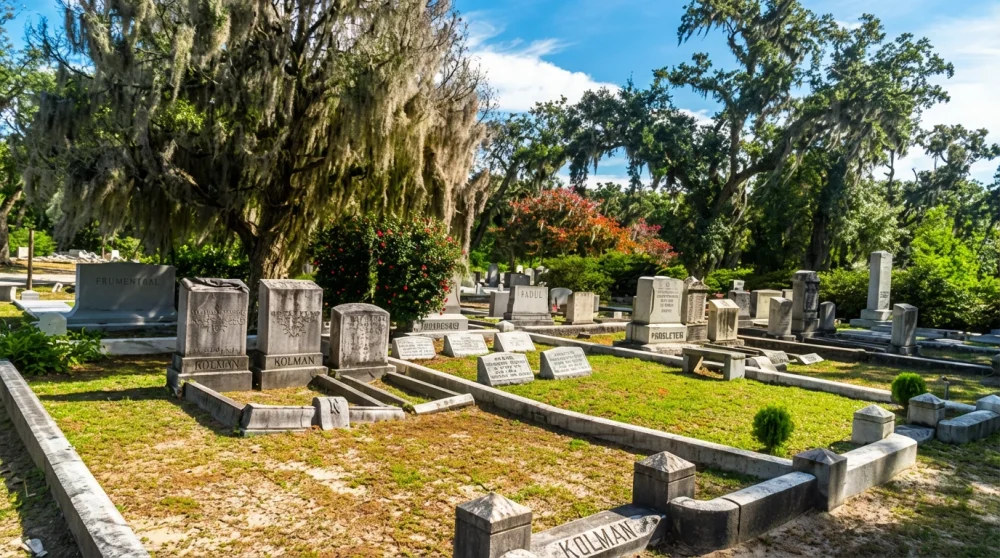
While the mansion is long gone, the layout remains. The tree-lined avenues you walk today were planted to frame a home that no longer exists. In 1907, the City of Savannah purchased the grounds, transforming the private Evergreen Cemetery into the public Bonaventure Cemetery we know today. It stands as a prime example of the Victorian garden cemetery movement, where death was not hidden away but integrated into nature as a place for the living to reflect.
Notable Graves & Stories You Can't Miss
With over 160 acres to cover, wandering aimlessly can be exhausting, especially in the Savannah heat. You should focus your energy on these specific sites that define the Bonaventure experience.
Little Gracie Watson
This is arguably the most visited site in the entire cemetery. Gracie Watson was the daughter of the manager of the Pulaski House Hotel and was a beloved figure in Savannah before she died of pneumonia at age six in 1889. Her grave features a life-sized sculpture carved by John Walz, which is so realistic it is said to capture her exact likeness. Pro Tip: You will often see toys or coins left at the base of the statue. While touching the statue is strictly prohibited to preserve the stone, leaving a small token is a local tradition.
Johnny Mercer
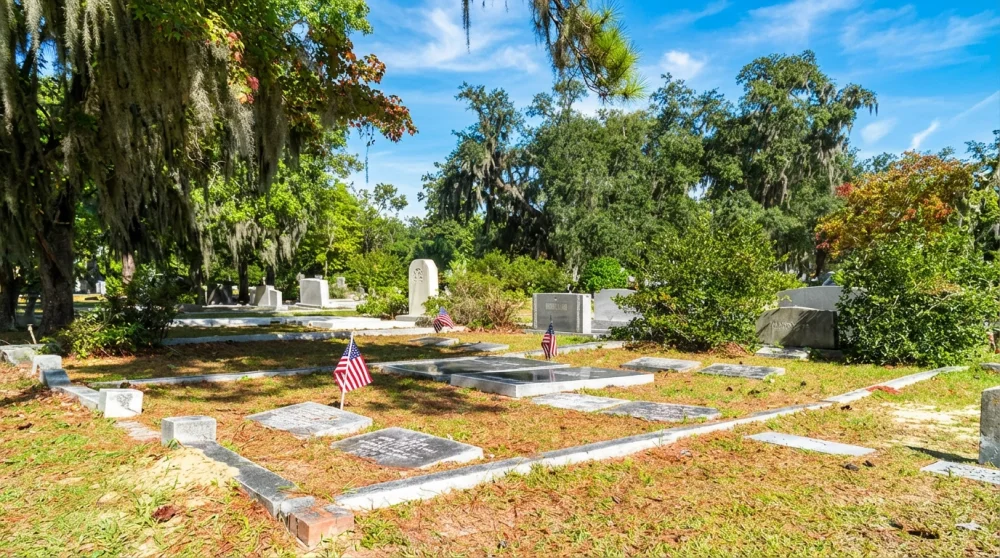
You cannot talk about Savannah without mentioning Johnny Mercer. The legendary lyricist behind Moon River and co-founder of Capitol Records rests here along with his family. His plot is a favorite for music lovers. You will find it by looking for the bench adorned with quotes from his famous songs. It sits near the river, fittingly, as the water he wrote about flows just beyond the bluff.
Conrad Aiken
The Pulitzer Prize-winning poet and author lived next door to the cemetery as a child and witnessed a family tragedy that shaped his life and work. His grave is famous for its bench, made of granite, which invites visitors to sit and have a drink with him. His epitaph reads, Cosmos Mariner, Destination Unknown, capturing the adventurous spirit of his work.
[image src=uploaded/image_146a0b.png cp=The detailed statue of Little Gracie Watson, surrounded by an iron fence and small gifts left by visitors.]
The Bird Girl Statue (Important Clarification)
Many visitors arrive expecting to see the famous Bird Girl statue featured on the cover of Midnight in the Garden of Good and Evil. You will not find it here. After the book became a bestseller, the statue was removed from the cemetery to protect it from the overwhelming crowds. It is now safely on display at the Telfair Academy museum in downtown Savannah. You can still visit the plot where it once stood, but the statue itself has moved on.
Understanding Victorian Symbolism
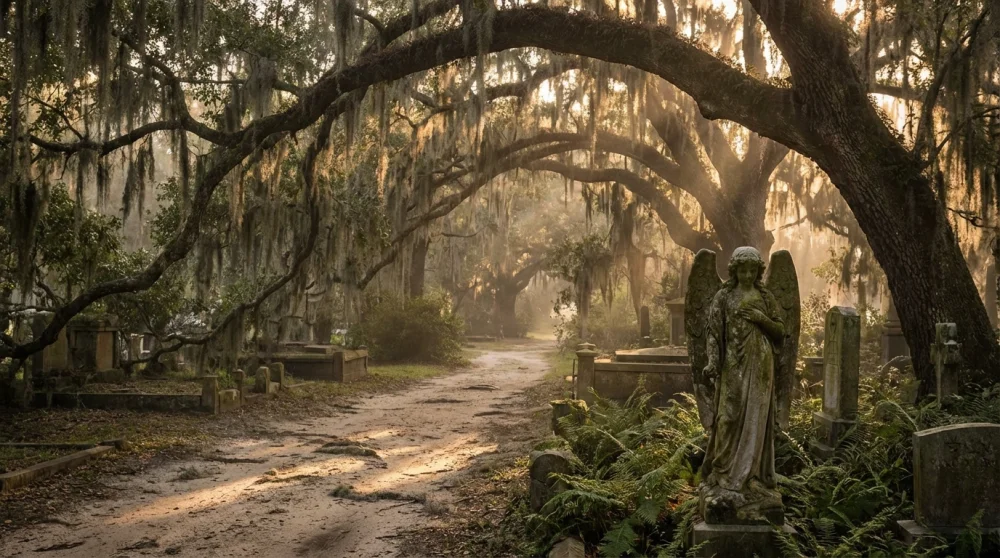
As you walk the grounds, you will notice that the headstones are speaking a secret language. Victorian families were obsessed with symbolism, and understanding these codes adds a layer of depth to your visit.
- Broken Columns: These represent a life cut short, often used for someone who died young or the head of a family who passed unexpectedly.
- Ferns: These symbolize humility and sincerity.
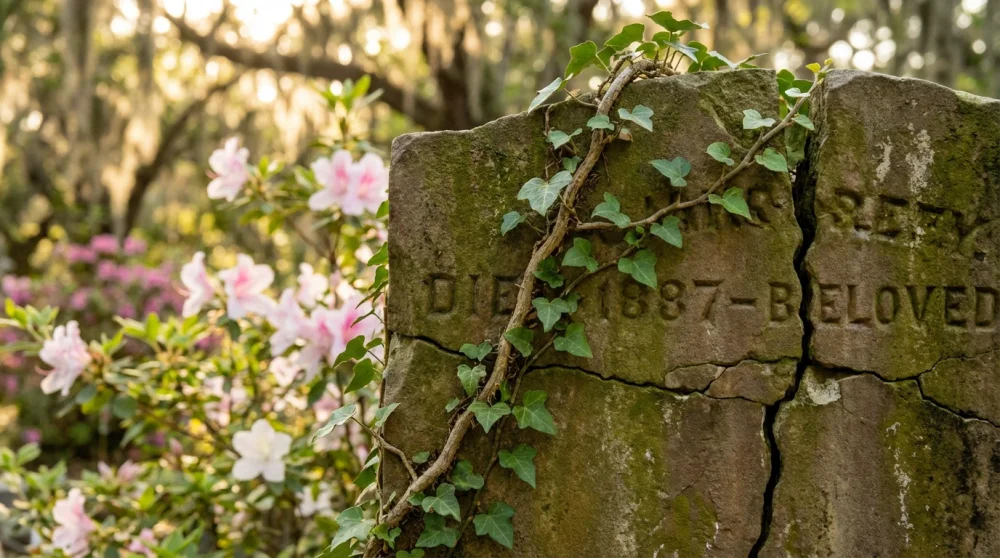
- Ivy: Because it stays green forever and clings to stone, ivy represents undying affection and eternal friendship.
- Draped Urns: The veil over the urn symbolizes the curtain between life and death.
Practical Guide to Visiting Bonaventure
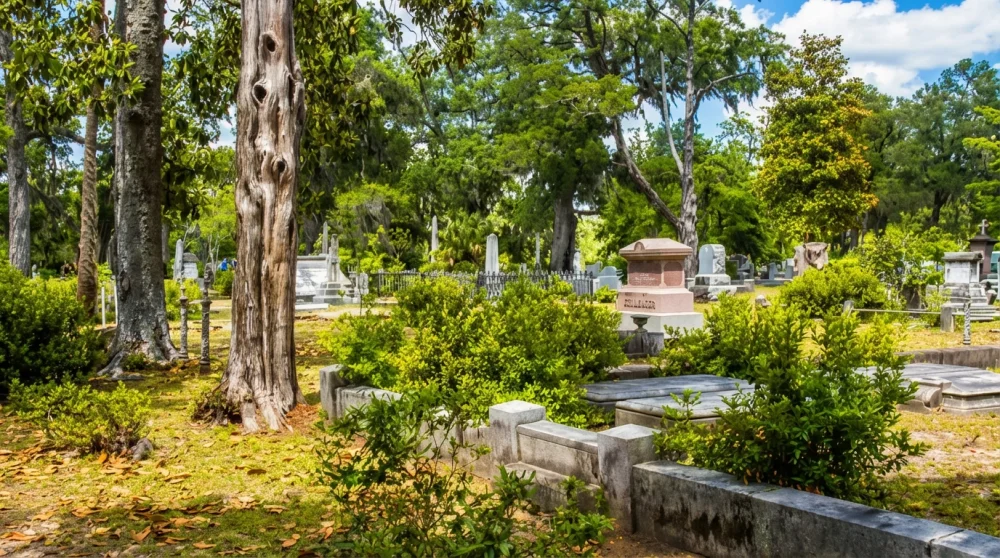
Visiting Bonaventure requires a bit of strategy. It is not just a walk in the park; it is a semi-tropical environment with its own rules.
Getting There and Parking
The cemetery is located at 330 Bonaventure Road, about a 15-minute drive from the Historic District.
- Driving: You can drive your car directly into the cemetery. This is highly recommended. The grounds are massive, and having a car allows you to drive between sections (like the Jewish section or the river bluff) and hop out to explore.
- Parking: Parking is free. You can park in designated lots or gently pull off to the side of the wide paved paths. Just ensure you do not block traffic.
Hours and Fees
- Admission: There is no entrance fee; it is completely free to the public.
- Hours: The gates are open daily from 8:00 AM to 5:00 PM. Security patrols will usher visitors out promptly at closing time, so plan your exit by 4:45 PM.
The No-See-Ums and Heat
This is the most critical advice for your trip: Bring bug spray. The cemetery sits on a river and is surrounded by marshes. In the warmer months (and even on warm winter days), the mosquitoes and gnats (no-see-ums) can be relentless.
- Hydration: There are no vending machines or cafes inside the cemetery gates. Bring your own water bottles.
- Restrooms: There are public restrooms at the Visitors Center near the entrance, but they may be a long walk if you are deep in the grounds.
Tours vs. DIY: How to Experience It
You have two main ways to tackle Bonaventure, and the right choice depends on your personality.
The DIY Approach: If you prefer solitude and photography, grab a map from the Visitors Center (sometimes they ask for a small donation) or download the Bonaventure Cemetery App (usually around $5-6). The app uses GPS to tell you stories as you approach specific graves. This allows you to move at your own pace and linger by the river.
The Guided Tour: If you want the deep folklore and the inside scoop on the scandals, a guided tour is worth the money. Reputable operators like Shannon Scott Tours or the Bonaventure Historical Society (which offers free tours on specific weekends) dive into the nuance of the stories that a placard simply cannot convey. They can point out the hidden symbolism and the faint inscriptions you might miss on your own.
Bonaventure is a place that rewards patience. Whether you drive through for an hour or spend a whole afternoon tracing the shadows of the live oaks, it leaves a mark on you. It is a reminder that in Savannah, the past isn't dead, it's just waiting for you to come visit.



![Telfair Museums Savannah Guide: Tickets, Hours & The Bird Girl [year]](https://www.rotasenin.com/uploads/2025/12/telfair-museums-savannah-exhibitions.webp)


Comments (0)
Sign in to comment
Report