Walking past the brick wall at 907 Whitehead Street in Key West feels less like entering a museum and more like crashing a very quiet, very historic party where the hosts are cats. For nearly ten years, this Spanish Colonial mansion was the center of Ernest Hemingway's world. It is where he fished for marlin, refereed boxing matches in the yard, and wrote some of the most enduring classics of American literature.
If you are planning a trip to the Florida Keys, this house is non-negotiable on your itinerary. But it is more than just a house; it is a living piece of history with a heartbeat, mostly thanks to the 60+ polydactyl cats that call it home. Whether you are a literature fan or just here for the famous six-toed felines, this guide helps you navigate the crowds, save on fees, and find the hidden details most tourists miss.
Before you head over, here is the practical data you need to save time and avoid surprises at the gate.
- Location: 907 Whitehead St, Key West, FL 33040
- Opening Hours: Open daily, 365 days a year, from 9:00 AM to 5:00 PM.
- Admission: Adults $19, Kids (6-12) $7, Children 5 and under are Free.
- Payment Method: They accept cards, but there is a surcharge. Bring cash to keep things fast and cheaper.
- Tours: A 20-30 minute guided tour is included with your ticket. No reservations required.
The Famous Polydactyl Cats: Descendants of Snow White
Let’s be honest, many visitors come for the architecture and stay for the cats. The Hemingway Home is famous for its colony of approximately 60 cats. About half of them exhibit the physical trait of polydactyly, meaning they have extra toes on their paws.
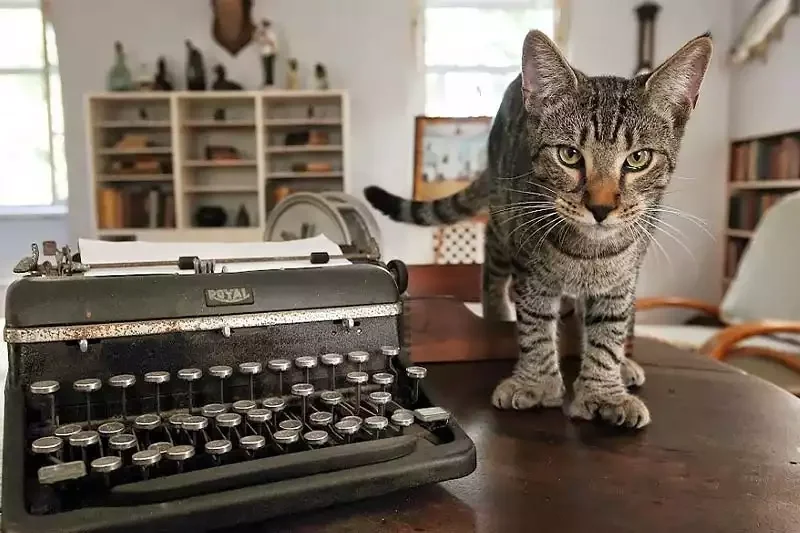
This tradition started with a white six-toed cat named Snow White, given to Hemingway by a ship captain. Today, the museum staff cares for these cats as if they were royalty. You will find them sleeping on Hemingway’s original furniture, lounging in the flower beds, and occasionally following tour groups.
Can you pet them? Yes, you can pet them if they are in the mood. However, you are strictly prohibited from picking them up. They are well-fed and cared for by a dedicated veterinarian, so they are generally friendly but independent.
Inside the House: A Step Back to the 1930s
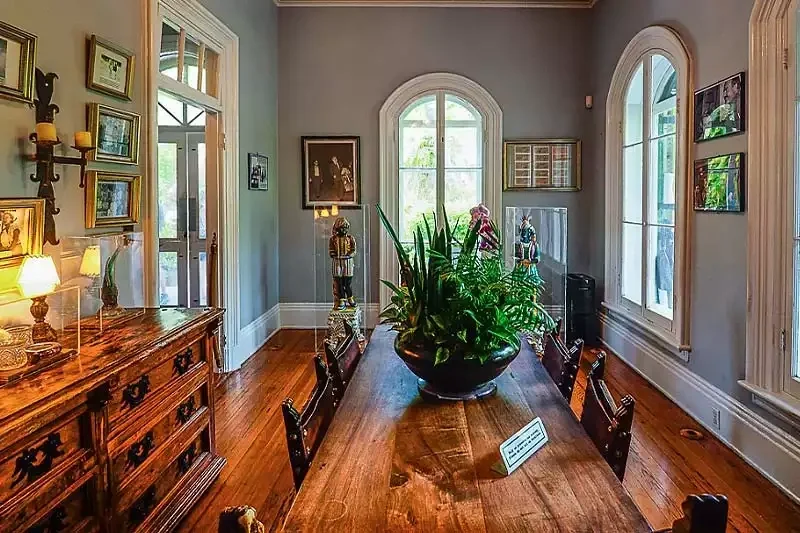
The house itself was built in 1851 and was in bad shape when Hemingway and his second wife, Pauline Pfeiffer, bought it in 1931. Pauline’s wealthy uncle, Gus, purchased the home for them, and the couple spent significant time and money restoring it.
As you walk through the rooms on the ground floor and the second level, look for the personal touches that tell the story of their life here:
- European Antiques: Pauline had a keen eye for design, collecting chandeliers and furniture from their time in Paris.
- The Pilar Photos: Throughout the home, you will see photos of Hemingway on his beloved boat, the Pilar. These offer a glimpse into his life as a sportsman, fishing for giant marlin in the deep waters between Key West and Cuba.
- The Catwalk: Notice how the second floor connects to the master bedroom. This openness allowed the breeze to flow through, a critical feature before air conditioning existed.
The Writing Studio: Where Masterpieces Were Born
For literature lovers, the highlight is the separate writing studio located on the second floor of the carriage house. Hemingway was disciplined about his work. He would wake up early, cross the catwalk (which is no longer there) from his bedroom, and write until the early afternoon.
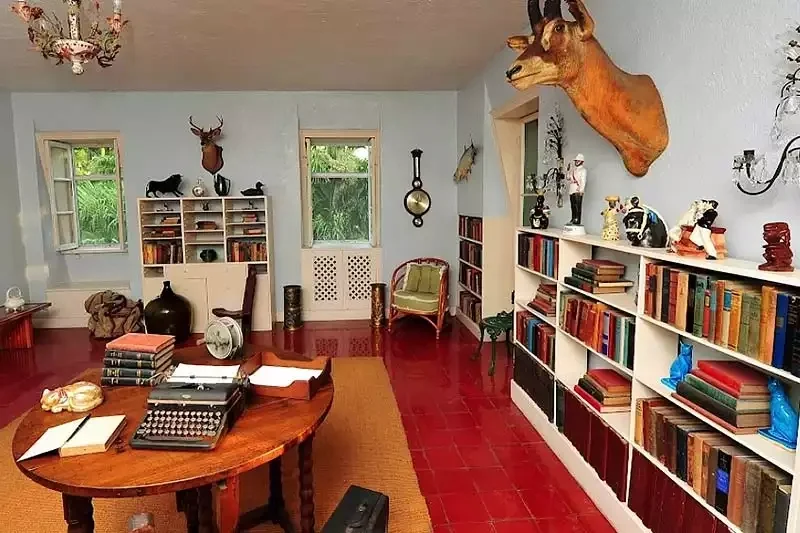
Standing in this room feels electric. This is the exact spot where he wrote or worked on:
- To Have and Have Not (set right here in Key West)
- The Snows of Kilimanjaro
- The Short Happy Life of Francis Macomber
- Green Hills of Africa
The studio is preserved behind a gate to protect the artifacts, but you get a clear view of his round table, his typewriter, and his bookshelves. It looks as if he just stepped out for a drink at Sloppy Joe’s.
The $20,000 Pool and The Last Penny Story
In the garden, you will find a massive in-ground swimming pool. In the late 1930s, this was the only pool within 100 miles. It was an incredible luxury that cost $20,000 to build—a fortune at the time, and actually more than the price of the house itself!
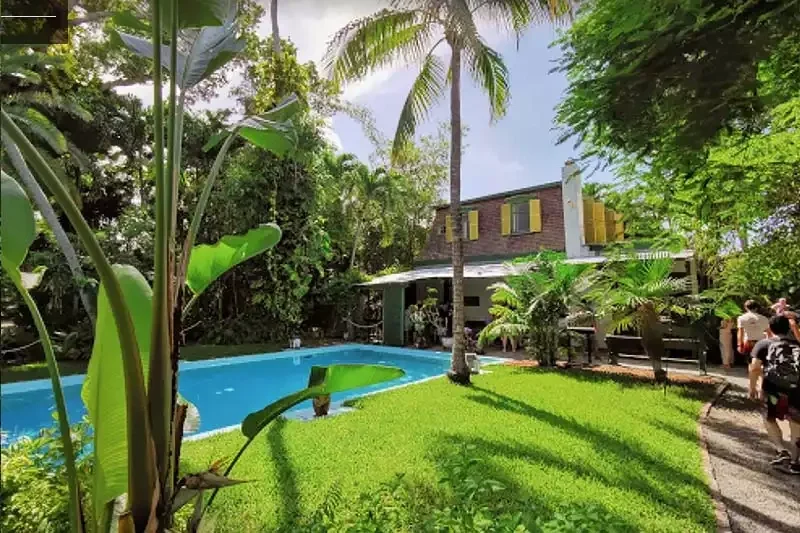
The Legend of the Penny: The story goes that while Hemingway was away as a war correspondent during the Spanish Civil War, Pauline had the pool built. When Ernest returned and found out how much it cost, he reportedly took a penny from his pocket, threw it onto the wet cement, and yelled, You might as well take my last cent!
Make sure to look near the north end of the pool. You can still see that penny embedded in the concrete today. It is a small detail that brings the volatile, passionate history of the Hemingway marriage to life.
Getting to Hemingway Home: Parking & Transport
Finding the Hemingway Home is easy, but parking your car is a different story. Located at 907 Whitehead Street in the heart of Old Town Key West, the museum sits directly across from the Key West Lighthouse. Since Old Town was built long before cars existed, narrow streets and limited space are the norm here.
Parking Situation: There is no dedicated parking lot for the Hemingway Home. You must rely on street parking or public lots. Street parking in this area is mostly reserved for residents with permits (marked Residential Only). If you park in these spots, you will get towed or fined. You can look for Pay to Park spots on nearby streets, but these fill up very fast.
Best Parking Options: Your best bet is to park at the Mallory Square Parking Lot or the Opal Key Resort & Marina garage near the waterfront. From there, you can enjoy a scenic 15-minute walk down Whitehead Street to the museum.
Alternative Transport
- Old Town Trolley: This is the most popular way to see the island. The trolley makes a stop very close to the Hemingway Home.
- The Duval Loop: This is a free bus service that runs around Old Town. It is a great way to save money and avoid the heat.
- Biking: Key West is incredibly bike-friendly. You can lock your bike on racks near the museum entrance.
Planning Your Visit: Tips for a Smooth Experience
To make the most of your visit 2026, keep these practical tips in mind:
- Bring Cash to Save Money While the museum accepts credit cards, their system often adds a processing fee, and the line for cash moves faster. Having exact change for your group is a smart move.
- Take the Free Guided Tour You might be tempted to wander alone, but the guides here are exceptional. They are storytellers who share hilarious and tragic anecdotes about Hemingway’s wives, his drinking buddies, and the cats. The tour takes about 30 minutes. After the tour, you are free to explore the gardens and revisit rooms at your own pace.
- Parking is Tricky Old Town Key West is not car-friendly. There is no parking lot at the museum. You will have to find street parking, which is rare and expensive. The best way to arrive is by walking, biking, or taking the Old Town Trolley.
- Hydrate and Dress Light Key West is hot and humid. While the house has fans and large windows, the garden tour is outdoors. Bring a water bottle and wear comfortable shoes.
- Visit the Bookstore The on-site bookstore is excellent. Buying a copy of The Old Man and the Sea or a biography here feels special. They often have a special stamp they can put in the book to prove it was purchased at his home.
The Hemingway Home is more than a tourist trap; it is a pilgrimage for anyone who appreciates history, cats, or the complex life of a man who lived large. It captures the spirit of Key West perfectly: slightly wild, historically rich, and very relaxed.


![Telfair Museums Savannah Guide: Tickets, Hours & The Bird Girl [year]](https://www.rotasenin.com/uploads/2025/12/telfair-museums-savannah-exhibitions.webp)

Comments (0)
Sign in to comment
Report