Most travelers automatically assume New York City is the undisputed heavyweight champion of North America when it comes to size and population. You might be surprised to learn that the crown actually belongs to a high-altitude capital south of the border. While NYC is iconic for its skyline and density, Mexico City (CDMX) operates on a scale that is hard to comprehend until you are standing in the middle of it.
If you are trying to decide between these two urban jungles for your next trip, or just want to understand the sheer magnitude of the continent's largest metropolis, you need to look beyond Wikipedia statistics. We are comparing them not just on headcount, but on the vibe, the cost, and the daily reality of navigating these colossuses.

The Battle of Numbers: Population and Area
When we talk about the largest US states area population, we often forget that North American geography extends beyond the US borders. The raw numbers paint a clear picture of why Mexico City holds the title.
New York City has a population of approximately 8.3 million people within its five boroughs. It is dense, frantic, and crowded. However, Mexico City’s population within city limits hovers around 9.2 million. The real difference appears when you zoom out to the metropolitan areas. The Greater Mexico City area is home to over 22 million people, whereas the New York metro area trails behind with roughly 19 million.
The feeling of size is also different. NYC is vertical; you are surrounded by canyons of steel. Mexico City is vast and horizontal, spreading out across a valley surrounded by volcanic mountains. This endless sprawl can make navigating the city feel like an expedition, especially when you factor in traffic that makes Manhattan look tame.
The Chaos Factor: What It Actually Feels Like
Numbers on a page are one thing, but standing on the subway platform is another. Both cities have legendary energy, but the flavor of the chaos is distinct.
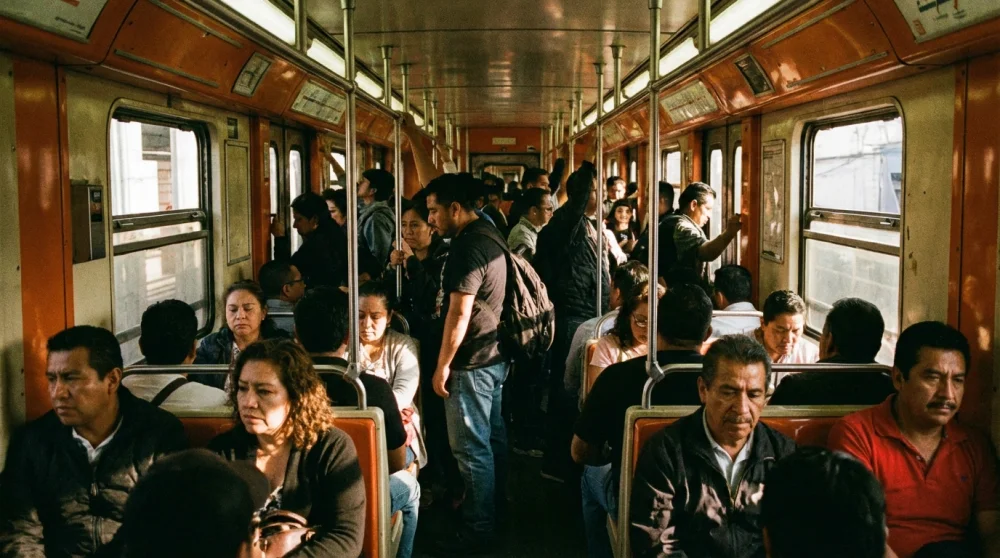
In New York, the pace is aggressive. People walk fast, talk fast, and the noise is a constant industrial hum. You are fighting for space on the sidewalk. In Mexico City, the chaos is more sensory. It is louder, not just from traffic, but from street vendors shouting, organ grinders playing, and music blasting from shops.
The public transport experience is a major differentiator. The NYC subway runs 24/7, which is a huge advantage, but it is often criticized for being grimy and delayed. Mexico City’s Metro is incredibly cheap (around $0.25 USD per ride) and efficient, but during rush hour, the crowding is suffocating. They even have designated women-only carriages to ensure safety and comfort, a feature you won’t find in NYC.
Cost of Living: How Far Does Your Dollar Go?
This is where Mexico City wins by a landslide. If you are a traveler or a digital nomad, your budget in CDMX will unlock a lifestyle that is reserved for millionaires in Manhattan.
In New York City, a standard cocktail might cost you $18 to $22, and a simple lunch can easily run $25. Rent for a small studio in Manhattan often starts above $3,500.
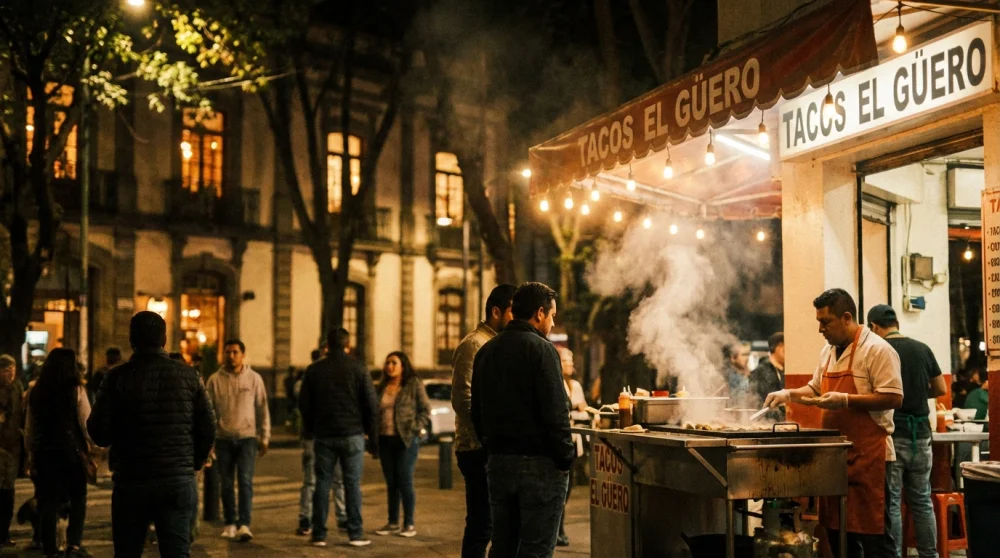
In contrast, Mexico City offers a luxury experience for a fraction of the price. You can have a world-class dinner in a trendy neighborhood like Roma Norte or Condesa for $30 to $50 per person, including drinks.
Street food, arguably the best in the world, costs pennies. You can get incredible tacos for less than $1 USD each. Accommodation follows the same trend; a high-end apartment in a safe, leafy neighborhood is often 60% to 70% cheaper than a cramped equivalent in Brooklyn or Manhattan.
Safety: Perception vs. Reality
Safety is the primary concern for most people considering Mexico City. It is important to be realistic here. New York City has seen fluctuations in crime, but it is generally considered safe for tourists who stay in main areas and follow basic travel tips. You can walk around most of Manhattan at night with reasonable confidence.
Mexico City requires more street smarts. While neighborhoods like Polanco, Roma, and Condesa feel very safe and are heavily policed, wandering into the wrong neighborhood can be dangerous. Petty theft is a risk in both cities, but in CDMX, you need to be more vigilant about transportation. Using apps like Uber is significantly safer than hailing random street taxis.
The key difference is the comfort zone. In NYC, the safe zone is massive. In Mexico City, the safe bubbles are distinct, and you need to know where the boundaries are.
Connectivity and Logistics
Getting to either city is relatively easy, but the airport experience differs. New York has three major airports (JFK, LGA, EWR), which can be confusing if you don't understand airport codes explained properly. The transfer from JFK to Manhattan can take over an hour and cost $70+ in a cab.
Mexico City’s main airport (AICM) is actually inside the city. You can take an Uber to the city center for $10 to $15, and it might only take 20 minutes if traffic is light. However, the airport is operating over capacity, so delays are common.
Which Jungle Should You Choose?
If you want the world’s best theater, the center of global finance, and a city where you can get a slice of pizza at 4 AM while walking through a canyon of skyscrapers, New York City is unbeatable. It is the center of the world for a reason.
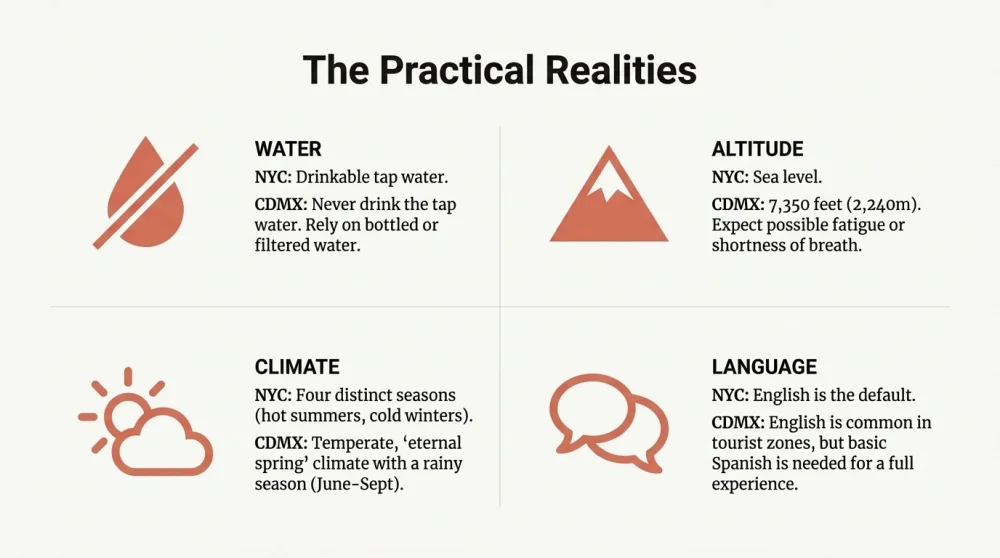
However, if you want to experience a culture that is deep, historical, and incredibly warm, all while spending a fraction of the money, Mexico City is the superior choice. It offers a blend of Aztec ruins, Spanish colonial architecture, and modern luxury that NYC simply cannot match. The city is greener, the food is spicier, and the scale of it will leave you humbled.
Both cities are titans of North America. The choice depends on whether you prefer the vertical hustle of the north or the sprawling, colorful chaos of the south.


![Telfair Museums Savannah Guide: Tickets, Hours & The Bird Girl [year]](https://www.rotasenin.com/uploads/2025/12/telfair-museums-savannah-exhibitions.webp)


Comments (0)
Sign in to comment
Report