Most travelers rush to Agra just for the Taj Mahal, but they often miss the real heart of the Mughal Empire. Imagine standing on a marble balcony where Emperor Shah Jahan spent his final years as a prisoner, gazing at the very monument he built for his beloved wife.
That is the haunting beauty of Agra Fort. This massive red sandstone fortress is not just a military structure; it is a palatial city where power, romance, and tragedy coexisted for generations.
- Location: 2.5 km northwest of Taj Mahal
- Entry Gate: Amar Singh Gate (The only entry for tourists)
- Time Needed: 2 to 3 hours
- Best Time: Sunrise or late afternoon (to avoid heat and crowds)
History of Agra Fort: More Than Just Red Stone
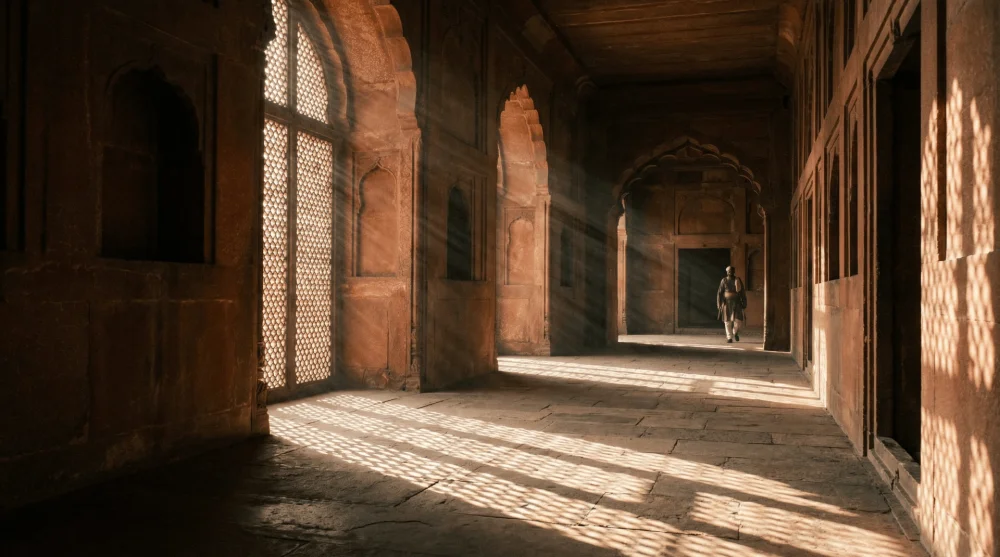
You might think this is just another fort, but the walls here tell the story of India's most powerful dynasty. Emperor Akbar started building this massive structure in 1565 primarily for military defense. He used red sandstone, which gives the fort its fiery appearance. However, the vibe inside changes completely when you step into the sections built by his grandson, Shah Jahan.
Shah Jahan loved white marble and luxury. He transformed the rugged military fort into a glittering palace. But history has a cruel sense of humor. The same emperor who beautified this fort was later imprisoned here by his own son, Aurangzeb. For eight long years, Shah Jahan lived in captivity in the Musamman Burj, with only a view of the Taj Mahal to comfort him until his death. Walking through these corridors, you can almost feel the weight of that history.
Inside Agra Fort: Key Palaces You Must See
The complex is huge, and you can easily get lost. Here is a curated route to ensure you do not miss the architectural highlights.
Jahangir Mahal
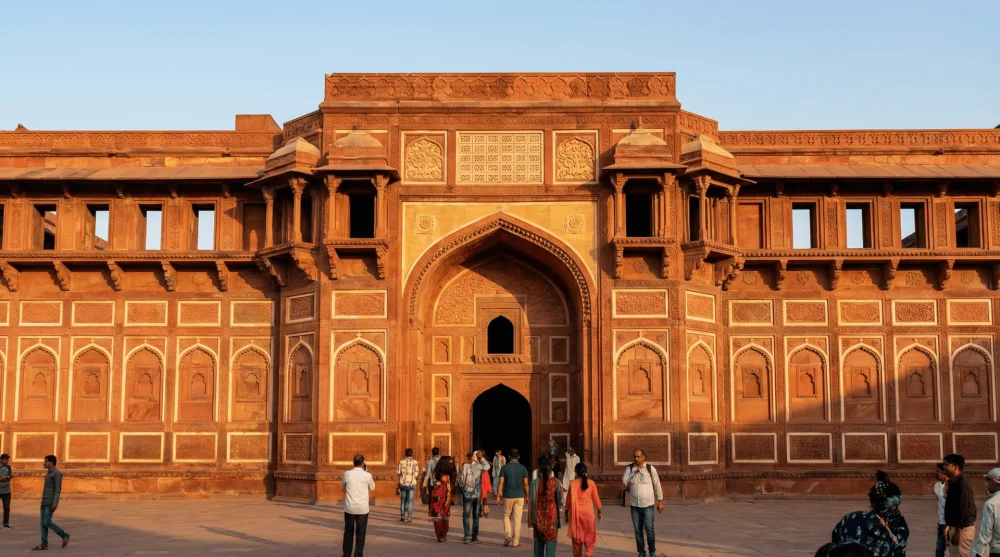
As you walk up the ramp from the main gate, the first major palace you face is the Jahangir Mahal. Built by Akbar for his son Jahangir, this place is a robust blend of Hindu and Islamic architecture. Look closely at the stone brackets and heavy beams; they resemble timber construction used in traditional Indian palaces. It is solid, imposing, and distinctly different from the delicate marble structures you will see next.
Khas Mahal and Anguri Bagh
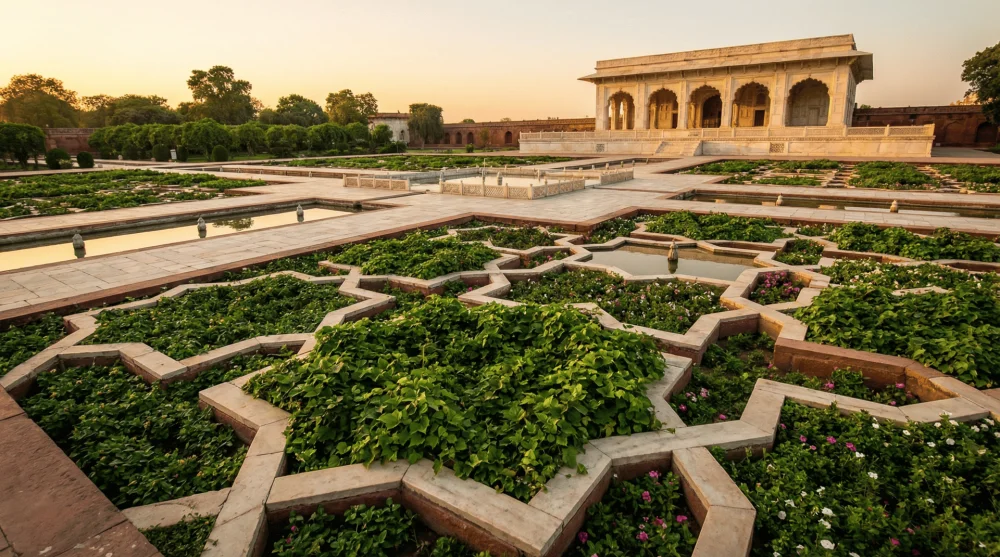
Move further in, and the red sandstone gives way to pristine white marble. The Khas Mahal was the emperor's private residence. It is airy and elegant, with intricate painting work on the marble surface. Right in front of it lies the Anguri Bagh, or the Garden of Grapes. In the past, this garden was harvested for premium wines for the royal family. Today, it is a geometrically perfect green space that offers a great photo opportunity against the white marble backdrop.
Musamman Burj
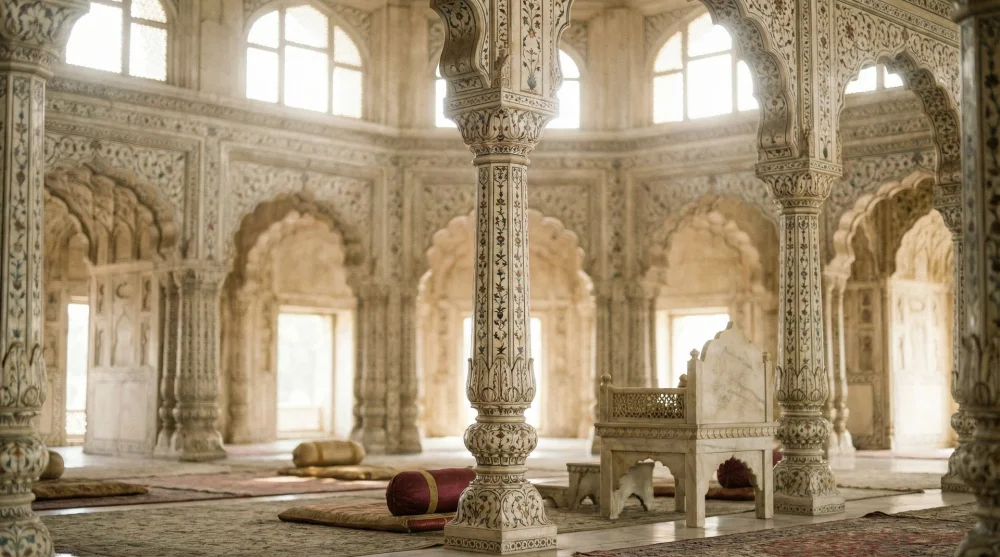
This is arguably the most emotional spot in the entire fort. This octagonal tower, with its delicate marble lattices and precious stone inlays, overlooks the Yamuna River. This is where Shah Jahan was imprisoned. Stand here for a moment and look out at the Taj Mahal in the distance. It is the exact view the fallen emperor had on his deathbed. The sunrise view from this point is absolutely spectacular.
Diwan-i-Am and Diwan-i-Khas
The Mughals knew how to separate business. The Diwan-i-Am (Hall of Public Audience) is where the emperor listened to the common people's grievances. It is a pillared hall designed to impress. In contrast, the Diwan-i-Khas (Hall of Private Audience) was for VIPs and state affairs. The famous Peacock Throne, which was later stolen and taken to Iran, once sat here.
Sheesh Mahal (The Mirror Palace)
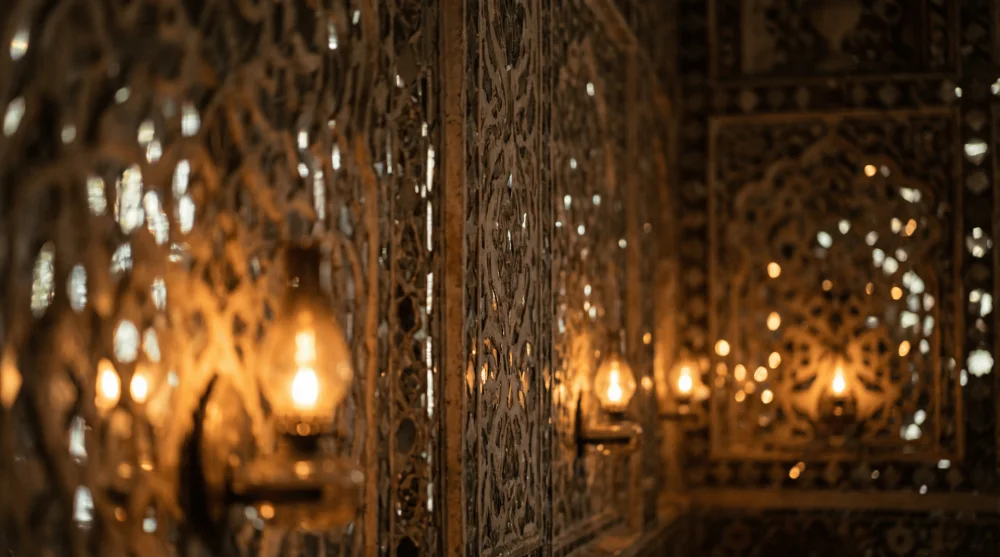
You might find this section closed to the public to preserve the delicate glasswork, but you can usually peek through the cracks or windows. The walls and ceiling are embedded with thousands of tiny mirrors. In the old days, lighting a single candle would illuminate the entire room like a starry night.
Entrance Fees & Timings 2026
The fort is open from sunrise to sunset every day. Buying your ticket online is a smart move to skip the long queues at the counter.
- Foreign Tourists: 600 INR
- Domestic Tourists: 50 INR
- Children (under 15): Free
Please note that these prices can change slightly, and there might be a small additional tax (ADA toll) if you have not paid it at other monuments like the Taj Mahal on the same day. Keep your ticket handy.
Essential Tips for Visiting
This section is critical for a smooth trip. We want you to enjoy the fort, not get stuck at security.
The Strict Security Check
Security here is tighter than at an airport. You cannot bring headphones, mobile chargers, power banks, tripods, or even books inside. If you have these items, you will have to leave them in a locker at the entrance, which wastes time. Carry only your phone, camera, wallet, and a water bottle.
Dealing with Guides
As you approach the Amar Singh Gate, you will be swarmed by people offering to be your guide. Many are unauthorized. If you want a guide to explain the history, book one through a reputable agency beforehand or look for the official government approved ID badges. A good guide adds immense value to the story of Shah Jahan, but a bad one will just rush you through to take you to a souvenir shop.
Best Time to Visit
Agra gets scorching hot. Visit early in the morning, right after sunrise, to beat the heat and the tour bus crowds. The morning light on the red sandstone is also much better for photography. If you are a sunset lover, go late in the afternoon, but be prepared for more people.
How to Get to Agra Fort
Reaching the fort is straightforward. If you are already at the Taj Mahal, you can take a battery powered rickshaw or an auto rickshaw. It is a short 2.5 km ride.
- From Taj Mahal: A quick 10-15 minute ride.
- From Agra Cantt Railway Station: About 5 km away. You can hire a prepaid taxi or use ride hailing apps like Uber or Ola, which work well in Agra.
Agra Fort or Taj Mahal?
You do not have to choose. In fact, seeing Agra Fort before the Taj Mahal gives you better context. You understand the power and the people behind the mausoleum first. Alternatively, visit the Taj Mahal at sunrise, have a leisurely breakfast, and then head to Agra Fort. This itinerary splits the heavy walking and keeps you fresh.
Agra Fort is not just a side trip; it is the chapter that completes the story of Mughal India. Make sure you give it the time it deserves.

![Madame Tussauds Amsterdam: Ticket Prices, Figures and Tips [year]](https://www.rotasenin.com/uploads/2026/01/madame-tussauds-amsterdam-music.webp)

Comments (0)
Sign in to comment
Report