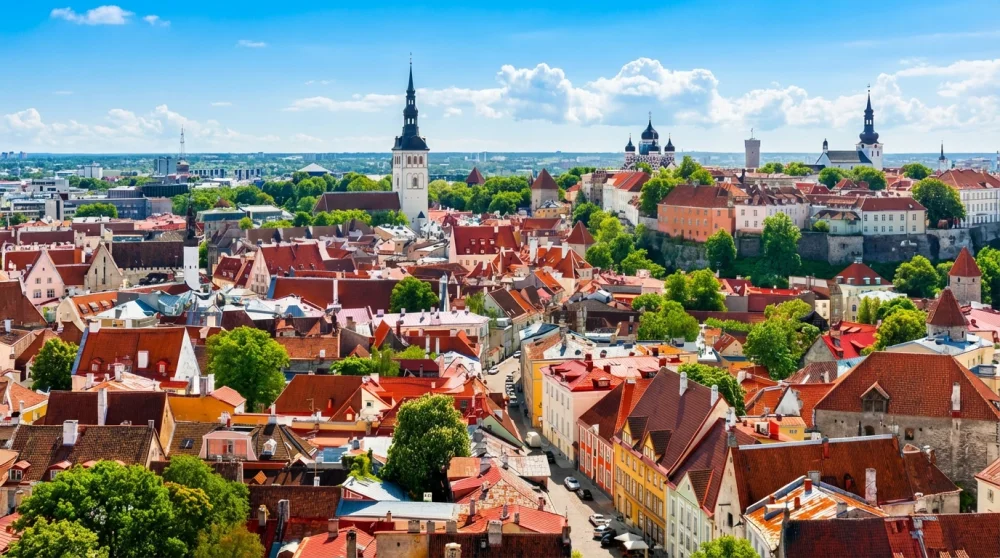
Deciding when to book your trip to Estonia depends entirely on which version of this Baltic gem you want to experience. Are you chasing the endless daylight of the White Nights, or are you dreaming of a snowy medieval fairy tale with glühwein in hand? Estonia transforms dramatically with the seasons. A trip in July feels like a completely different country compared to a visit in December.
- Best Overall Weather: June to August.
- Best for Budget Travelers: April, May, and September.
- Best for Christmas Vibes: December.
- Best for Nature: October.
Summer in Estonia: The Season of White Nights (June – August)
Summer is hands down the most popular time to visit Estonia, and for good reason. After a long, dark winter, the country bursts into life. The days are incredibly long; in late June, the sun barely sets, creating the magical phenomenon known as White Nights.
Why go now
Endless Daylight: You will have up to 19 hours of daylight to explore. You can walk around Tallinn Old Town at 11 PM, and it will still be bright enough to take photos without a flash.
Beach Culture: Yes, Estonia has beaches! Pärnu, the Summer Capital, comes alive with spas, surfing, and beach cafes.
Festivals: The Song Celebration (Laulupidu) and Jaanipäev (Midsummer Day) are massive cultural events held during this season.
The Trade-off
This is peak tourist season. The streets of Tallinn, especially Viru Street, can get packed with cruise ship passengers during the day. Prices for accommodation in the city center are at their highest in July.
Pro Tip: If you visit in summer, try to explore the popular spots early in the morning or late in the evening. The cruise crowds usually leave by 5 PM, leaving the Old Town to you and the locals.
Winter in Estonia: A Medieval Winter Wonderland (November – March)
If you aren't afraid of the cold, winter in Estonia offers a cozy, almost mystical atmosphere that you won't find anywhere else in Europe.
Why go now
Tallinn Christmas Market: Often voted the best in Europe, the market on Raekoja Plats (Town Hall Square) is straight out of a storybook. Think towering Christmas trees, local handicrafts, and steaming cups of glögi (mulled wine).
Lower Prices: Outside of the Christmas weeks (late December - early January), hotel prices drop significantly.
Sauna Culture: There is nothing quite like jumping into an icy lake or rolling in the snow after a hot wood-fired sauna session. This is the authentic Estonian experience.
The Reality Check
It gets cold, really cold. Temperatures can drop to -20°C (-4°F), though -5°C (23°F) is more common. The biggest challenge, however, is the darkness. In December and January, you might only see 6 hours of daylight. You need to plan your sightseeing carefully to maximize the light.
Shoulder Seasons: Spring and Autumn
If you want to avoid the crowds and save money, the shoulder seasons are your best bet.
Spring (April – May)
Spring arrives late in the Baltics. April can still be slushy and gray (locals call it the mud season), but by May, the parks turn green, and the outdoor terraces start opening up. It is a fantastic time for birdwatching on the western coast.
Autumn (September – October)
September is often surprisingly warm. By October, the country turns golden. This is the absolute best time for hiking in Lahemaa National Park or visiting the famous bogs like Viru Bog. The mosquitoes are gone, the air is crisp, and the forests are vibrant red and yellow.
Month-by-Month Breakdown
To help you plan specifically, here is what to expect throughout the year:
- January - February: Deep winter. Perfect for museums, spas, and cross-country skiing. Pack thermal underwear.
- March: The thaw begins. Streets can be wet and slippery. Not the most photogenic month.
- April: Quiet and affordable. Good for budget travelers who don't mind unpredictable weather.
- May: Nature wakes up. Great for day trips to Tartu or Helsinki.
- June: The start of peak season. Midsummer celebrations (June 23-24) are huge, so shops may close, and locals head to the countryside.
- July: Warmest weather (avg. 20-25°C / 68-77°F). Festivals are in full swing.
- August: Still warm, but the nights start getting darker. Great for outdoor concerts.
- September: Cooler air, fewer tourists. Excellent value for money.
- October: Rainy and windy, but beautiful autumn colors.
- November: Dark and gray. However, the Christmas Market usually opens in the last week of November.
- December: Festive, snowy, and magical. Book your accommodation well in advance.
What to Pack for Estonia
The weather in the Baltics is notoriously changeable. The local saying goes that there is no bad weather, only bad clothing.
For Summer: Bring a light jacket or sweater. Even on hot days, the evenings by the sea can get chilly. A raincoat is essential year-round. For Winter: Layers are key. You need a windproof, water-resistant winter coat, insulated boots with good grip as cobblestones get slippery, gloves, a scarf, and a hat. Do not underestimate the wind chill coming off the Baltic Sea.
![Orca Whale Watching in Washington: The Ultimate [year] Guide (Seattle & San Juan Islands)](https://www.rotasenin.com/uploads/2026/01/washington-best-time-to-see-orca-whale-watching.webp)
![10 Cheapest Places for Skydiving in the World ([year] Price Guide)](https://www.rotasenin.com/uploads/2026/01/cheapest-skydiving-destinations-cuautla-mexico.webp)
![Museumplein Amsterdam: Things to Do, Museums & Events ([year])](https://www.rotasenin.com/uploads/2026/01/museumplein-amsterdam-three-museums.webp)

Comments (0)
Sign in to comment
Report