
You might have just arrived in Turkey or perhaps you have been living here for a while. You wake up on a Friday morning, walk into a local bakery to get your simit, and the shopkeeper greets you with a warm Hayırlı Cumalar instead of the usual Günaydın. Then you check your phone and see a message from a Turkish friend saying the same thing.
Don't panic. You haven't missed a public holiday and you are not expected to recite a prayer. This is one of the most common social interactions in Turkish culture. Learning how to respond to this phrase is the fastest way to earn respect and blend in with the locals. It is a simple gesture that transforms you from a tourist into an insider.
The Meaning of Hayırlı Cumalar
The phrase Hayırlı Cumalar translates literally to Have an Auspicious Friday or Blessed Friday. While Friday is the holy day in Islam, similar to Sunday in Christianity or Saturday in Judaism, this greeting has evolved beyond just a religious statement. In Turkey, it functions as a social glue.
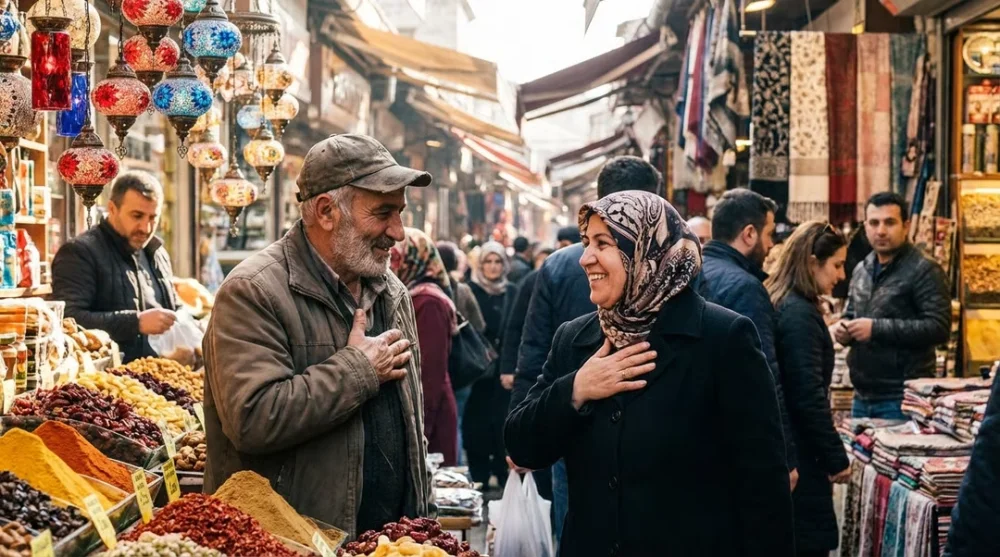
Think of it as a culturally deeper version of TGIF (Thank God It's Friday). When a taxi driver, a colleague or a neighbor says this to you, they are acknowledging the special energy of the day and wishing you well. It is used to spread positivity and good vibes before the weekend starts. You will hear it everywhere from corporate offices in Istanbul to small villages in Cappadocia.
How to Reply to Hayırlı Cumalar? (The Most Important Part)
This is the part where most foreigners get stuck. If someone says Günaydın, you say Günaydın back. But if someone throws a Hayırlı Cumalar at you, repeating the exact same phrase can sometimes feel a bit repetitive, though it is not wrong.
Here are the most natural ways to respond like a local, categorized by who you are talking to.
The Safest & Most Common Reply: Size de
If you want a one-size-fits-all answer that works for everyone, this is it. Size de (pronounced See-ze-de) means To you too.
You can use this with your boss, your landlord, the shopkeeper or someone you just met. It is polite, respectful and grammatically covers the formal You (Siz). It shows that you appreciate their well wishes and return the sentiment without needing to construct a complex sentence.
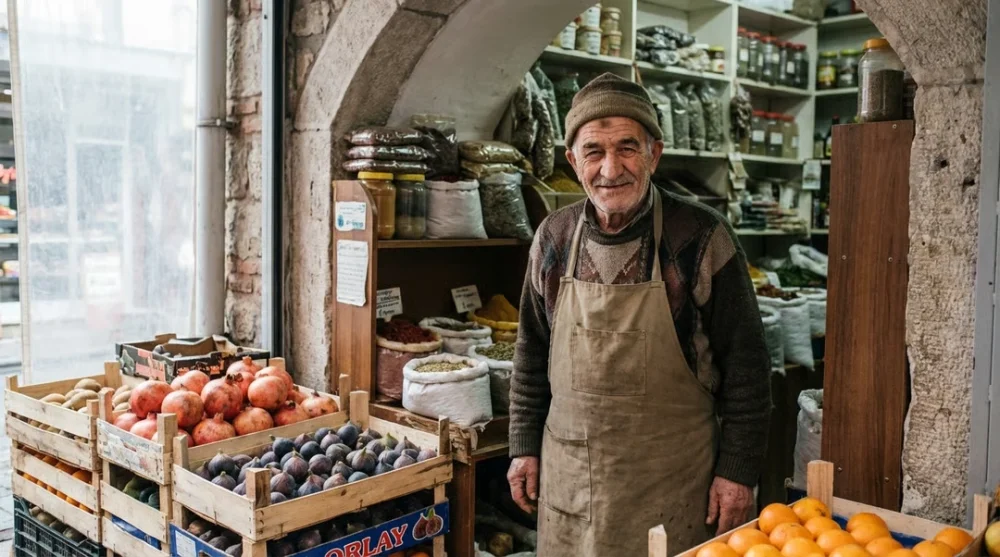
Friendly & Casual: Sana da
If you have close Turkish friends or peers who you are already on informal terms with, you can switch to Sana da. This means To you too but in the singular, informal form.
Use this only if you would normally address that person as Sen (You singular). Using this with an elderly neighbor or a stranger might sound a bit too familiar, so when in doubt, stick to Size de.
Polite & Formal: Teşekkürler, hayırlı cumalar
If you want to sound completely fluent and polite, you can combine a thank you with the greeting. Teşekkürler, hayırlı cumalar means Thanks, have a blessed Friday.
This works exceptionally well in business emails, meeting closings or when leaving a shop. It completes the circle of courtesy perfectly.
Other Common Friday Phrases You Might Hear
While Hayırlı Cumalar is the champion of Friday greetings, you might encounter a few variations depending on the circle you are in.
Cumanız Mübarek Olsun: This is a slightly more formal and traditional version. It translates to May your Friday be blessed. You will hear this more often from older people or in more conservative neighborhoods. The reply remains the same; a simple Size de or Teşekkürler works perfectly.
Hayırlı, bereketli Cumalar: Here the speaker is wishing you an auspicious and fruitful Friday. They are hoping your day brings abundance. It is a very kind wish to receive.
The Friday Message Culture on WhatsApp
If you are in any WhatsApp groups with Turkish people, or if you have given your number to local friends, prepare your phone storage. On Friday mornings, a digital phenomenon occurs known as Cuma Mesajları (Friday Messages).

These are often images or GIFs featuring roses, tea glasses, scenic mosques or nature views with a Hayırlı Cumalar text overlaid. It is a digital way of checking in. You are not obligated to reply to every single image with a poem. A simple thumbs-up emoji, a heart or a short Size de text is perfectly acceptable social etiquette.
Is Friday a Weekend in Turkey?
This is a common confusion for newcomers. Unlike some other countries in the Middle East where the weekend is Friday and Saturday, Friday is a regular working day in Turkey. Banks, government offices, schools and shops are fully open.
However, there is a practical nuance you should know regarding daily planning. Cuma Namazı (Friday Prayer) happens around noon. The exact time changes slightly depending on the season, but it usually coincides with lunch hours.
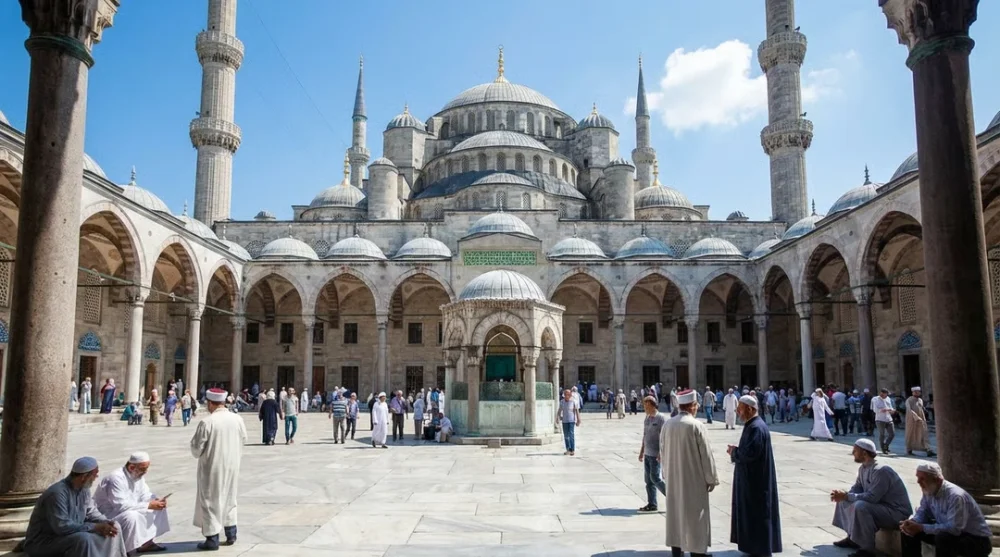
During this time, you might find that some small business owners close their shops for about an hour. Also, traffic in city centers can get heavier around mosques during prayer entry and exit times. If you have a meeting or a lunch reservation, it is smart to account for this slight shift in the midday rhythm.
![Orca Whale Watching in Washington: The Ultimate [year] Guide (Seattle & San Juan Islands)](https://www.rotasenin.com/uploads/2026/01/washington-best-time-to-see-orca-whale-watching.webp)
![10 Cheapest Places for Skydiving in the World ([year] Price Guide)](https://www.rotasenin.com/uploads/2026/01/cheapest-skydiving-destinations-cuautla-mexico.webp)
![Museumplein Amsterdam: Things to Do, Museums & Events ([year])](https://www.rotasenin.com/uploads/2026/01/museumplein-amsterdam-three-museums.webp)


Comments (0)
Sign in to comment
Report