Ruby Beach is widely considered the crown jewel of the Olympic National Park coastline. Unlike the sandy shores you might find in California, this beach offers a rugged, wild beauty defined by massive sea stacks, chaotic piles of driftwood, and dramatic foggy mornings. It creates a moody atmosphere that photographers and nature lovers seek out specifically for its raw appeal.
While the views are undeniably impressive, visiting this remote section of the Pacific Northwest requires some preparation. The ocean here is powerful, and the terrain can be tricky if you arrive unprepared. This guide covers the essential logistics, from navigating the driftwood barriers to timing your visit for the best tide pool experience.
- Location: Olympic National Park, Southwest Coast (near Kalaloch).
- Entrance Requirement: Olympic National Park Pass or America the Beautiful Pass is required.
- Accessibility: Difficult. You must climb over large driftwood logs to reach the sand.
- Best Time to Visit: Low tide is essential for seeing marine life and accessing sea stacks.
- Pet Policy: Dogs are allowed but must be on a leash at all times.
Why Ruby Beach is Unmissable
The beach gets its name from the garnet fragments in the sand that can create a reddish glow in the right light, but the real stars here are the rock formations. Huge monoliths like Abbey Island stand guard just offshore, breaking the giant Pacific waves and creating a habitat for diverse wildlife.
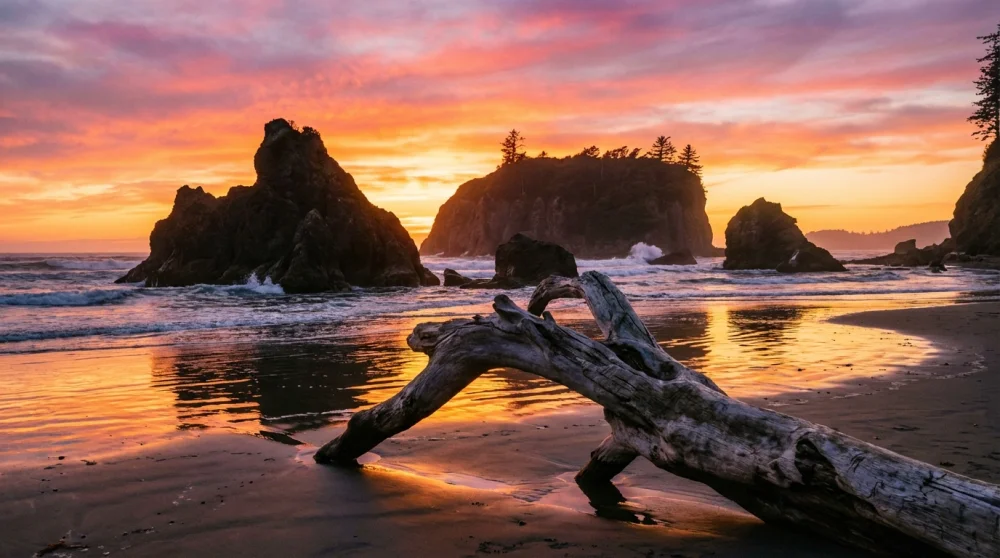
This is not a swimming beach. The water is dangerously cold year-round and strong rip currents are common. Instead, you come here to explore. The shoreline is a dynamic mix of gray stones, dark sand, and the massive trunks of bleached cedar trees that have been tossed ashore by winter storms. It offers a sensory experience where the smell of salt spray mixes with the earthy scent of the rainforest behind you.
Planning Your Visit: Everything You Need to Know
Reaching this remote spot takes a bit of driving, but the journey along Highway 101 is part of the experience.
Location and Getting There
Ruby Beach is located on the southwest coast of the Olympic Peninsula, approximately 27 miles south of the town of Forks. If you drive from Seattle, the trip takes about four hours and winds through deep forests and along the coast. The entrance is well-marked on Highway 101.
Parking and Entrance Fees
The parking lot is relatively large but fills up very quickly during the summer months and sunny weekends. To secure a spot, you should plan to arrive before 10:00 AM or later in the evening for sunset. Since this area falls within Olympic National Park boundaries, you need to display a valid park pass on your dashboard. You can purchase a standard entrance pass for 30 USD or use an annual pass.
Best Time to Visit: Tides Matter
Checking the tide tables before you drive here is crucial. If you arrive at high tide, the water comes all the way up to the driftwood logs, leaving you with almost no beach to walk on.
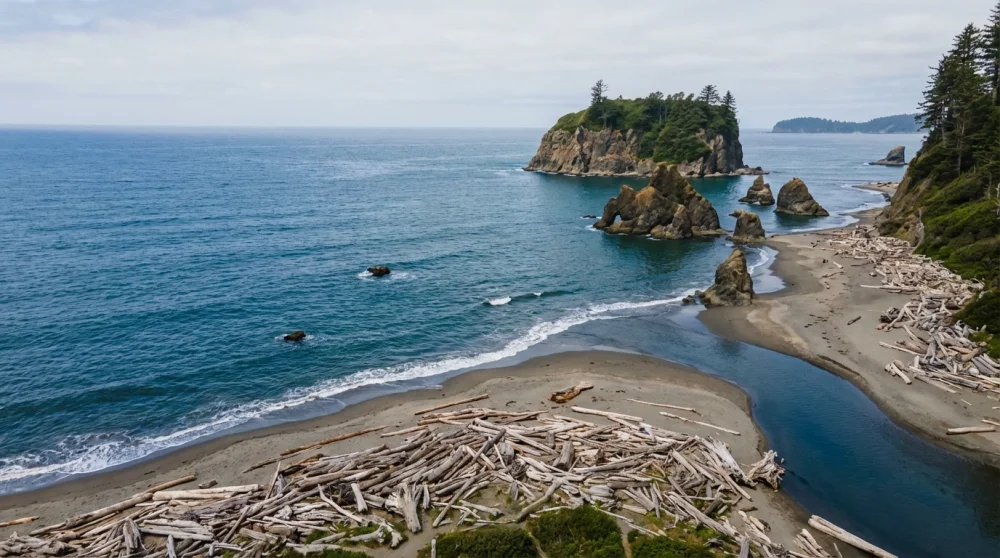
- Low Tide: This is when the magic happens. The ocean recedes to reveal vast rocky areas and tide pools that are otherwise underwater.
- Sunset: The sea stacks create perfect silhouettes against the dropping sun. Photographers flock here during the golden hour to capture the light reflecting off the wet sand and rocks.
Things to Do in Ruby Beach
Exploring the Tide Pools
When the water retreats, the rocky areas around the sea stacks transform into natural aquariums. You can find vibrant ochre sea stars, green sea anemones, crabs, and limpets clinging to the rocks.
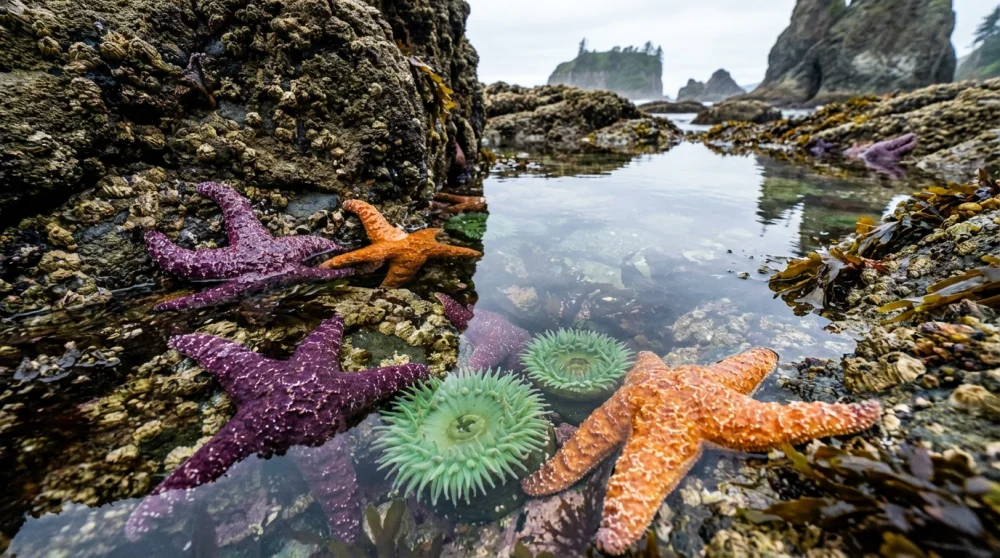
You must step carefully on the slippery, seaweed-covered rocks. Observation is key, but you should never pry a starfish off a rock or poke the anemones. These are fragile ecosystems. The best tide pooling spots are usually found near the base of Abbey Island (the largest sea stack) during a negative low tide.
Photography and Sightseeing
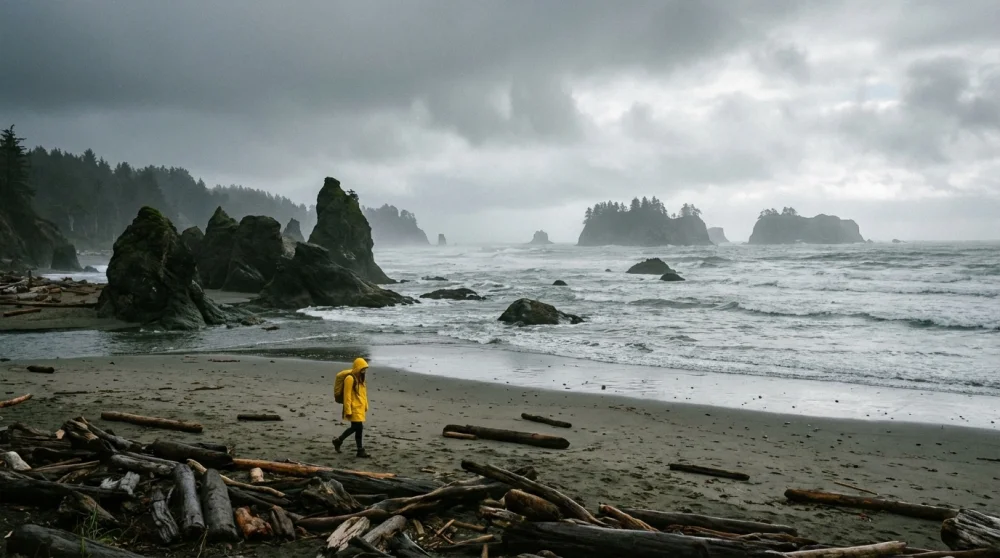
The scenery changes drastically depending on the weather. On sunny days, the water sparkles and the views stretch for miles. However, the quintessential Olympic Coast experience often involves mist and fog. This moody weather adds a layer of mystery to the sea stacks and makes for dramatic, high-contrast photos.
Hiking and Beachcombing
Once you reach the sand, you can walk for miles in either direction. Heading north takes you toward the mouth of the Hoh River (a much longer hike), while heading south offers great views of Destruction Island and its lighthouse. You will encounter Cedar Creek crossing the beach. Depending on the rainfall and tide, you might need to wade through shallow water to cross it, so waterproof boots are a smart choice.
Important Safety and Accessibility Tips
User reviews often highlight specific challenges that standard travel brochures miss. Being aware of these ensures a safe trip.
The Driftwood Obstacle
This is the most critical logistical detail for visitors with mobility issues, small children, or strollers. The trail from the parking lot is a wide, downhill gravel path that is easy to navigate. However, the trail ends at a massive pile of driftwood logs.
To get to the beach proper, you have to physically climb over these shifting, potentially slippery logs. There is no paved ramp or boardwalk over them. This natural barrier makes the beach inaccessible for wheelchairs and very difficult for anyone with knee or hip problems.
Sneaker Waves and Ocean Safety
The Pacific Ocean is unpredictable. Sneaker waves (large, powerful waves that appear without warning) can surge high up the beach, moving heavy logs and sweeping people off their feet. You should never turn your back on the ocean. Keep a close eye on children and dogs, especially near the waterline.
Amenities and Facilities
You will find vault toilets (dry restrooms) at the parking lot. While functional, they see high traffic and can be unpleasant, so you might want to stop at a full-service restroom in Forks or Kalaloch Lodge before arriving. There is no drinking water or food available at the beach, so you must bring your own supplies and pack out all your trash.
Where to Stay Nearby
Accommodation options are sparse in this remote region.
- Kalaloch Lodge: Located just south of Ruby Beach, offering cabins with ocean views.
- South Beach Campground: A popular spot for campers who want to sleep right next to the ocean (first-come, first-served).
- Forks: The town offers a wider range of motels, grocery stores, and vacation rentals.
Ruby Beach offers a raw connection to nature that stays with you long after you leave. The sound of the crashing waves, the challenge of the driftwood, and the discovery of a hidden starfish in a tide pool make the journey to the edge of the continent completely worth it. Just remember to check the tides, wear sturdy shoes, and respect the power of the ocean.
![10 Cheapest Places for Skydiving in the World ([year] Price Guide)](https://www.rotasenin.com/uploads/2026/01/cheapest-skydiving-destinations-cuautla-mexico.webp)
![Museumplein Amsterdam: Things to Do, Museums & Events ([year])](https://www.rotasenin.com/uploads/2026/01/museumplein-amsterdam-three-museums.webp)



Comments (0)
Sign in to comment
Report