If you are traveling through the Mediterranean coast of Turkey (Türkiye) and find yourself near Mersin or Adana, you are standing on historically charged ground. You aren't just visiting a city; you are walking the same streets as Saul of Tarsus, the man the world knows as Saint Paul.
Let’s be real for a second: Tarsus doesn't offer the visual grandeur of the Colosseum in Rome or the massive library of Ephesus. If you come here expecting monumental ruins at every corner, you might be surprised by the modern city wrapping around the history. However, for anyone interested in biblical history or faith tourism, St. Paul’s Well and the St. Paul Church are non-negotiable stops. They carry a spiritual weight that transcends architecture.
I’ve put together this practical guide to help you navigate these two specific sites, manage the logistics, and understand exactly what you are looking at.
Know Before You Go: Practical Logistics
Before we dive into the history, here are a few field notes to save you time and confusion. Tarsus can be tricky if you don't know the layout.
- Two Separate Sites: This is the most common confusion. The Well (where his house stood) and the Church (Museum) are not in the same garden. They are within walking distance of each other (about a 5-10 minute walk through the old town), but they have separate entrances and checkpoints.
- Entrance Fee: The entrance fee fluctuates with exchange rates but expect to pay.
- The Museum Pass: If you are planning to visit other sites in Turkey (like Ephesus, Goreme, or Troy), I highly recommend buying the Museum Pass Turkey. It covers both the Well and the Church, and it saves you from queuing at ticket booths.
- Parking: The streets in the Old Tarsus district are narrow and historic. It is best to park your car in a designated lot nearby and explore on foot.
St. Paul’s Well: More Than Just Water
When you enter the courtyard tucked between old Tarsus houses, you might initially think, Is this it? It's just a well. But context is everything here.
Scholars and tradition hold that this courtyard was the location of the house where the Apostle Paul was born and raised. The architecture you see today isn't from his time, but the location is the key.
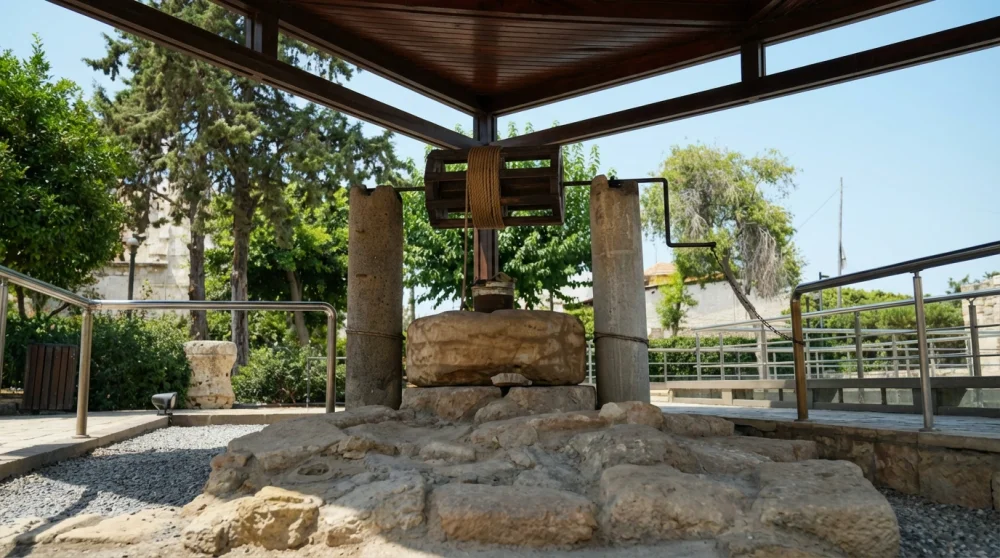
The well itself is cylindrical at the top but turns into a square shaft lined with hewn stones as it goes deeper. It’s about 38 meters (125 feet) deep. Locals will tell you that the water here has never run dry, regardless of the scorching droughts of the Çukurova region.
The Holy Water Experience
For Christian pilgrims, this is often the highlight of the trip. The water is believed by many to have healing properties. It is potable, and the taste is surprisingly soft compared to other local water sources.
Pro Tip: Bring a small, empty bottle with you. You can draw water from the well to drink or wash your face. While there are sometimes cups available, it’s much more hygienic and convenient to have your own container if you want to take some holy water home with you.
Beneath the Glass: The Archaeology
Right next to the well, you’ll notice a section of the ground covered with thick glass. Don't just walk over it, look down. These are the excavated foundations of the house believed to belong to St. Paul's family. Seeing the ancient walls protected under the glass gives you a tangible connection to the 1st century AD. It can get a bit dusty or foggy depending on the weather, but it’s a thrill to know what lies beneath your feet.
St. Paul Church (Memorial Museum)
After visiting the well, take a short walk to the St. Paul Church. Built roughly around the 11th or 12th century and extensively renovated in 1862, this building serves as a Memorial Museum today. While it is not an active parish with daily services, it is occasionally used for special ceremonies by Christian communities.
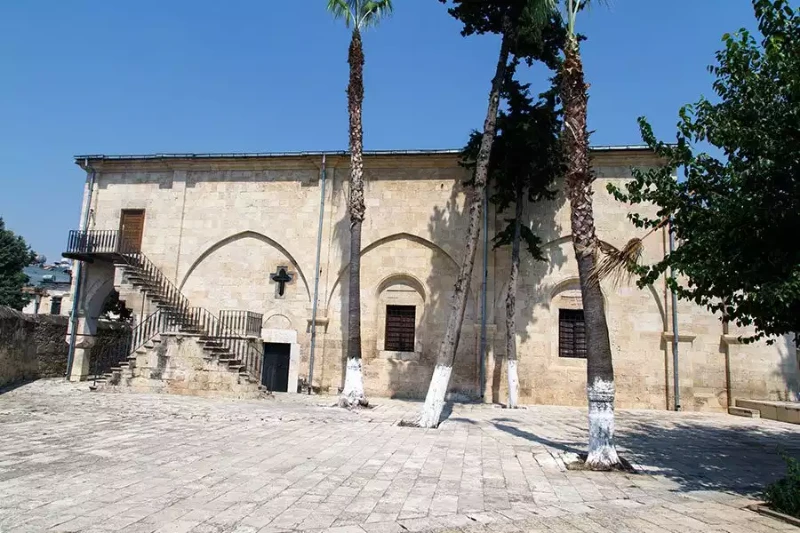
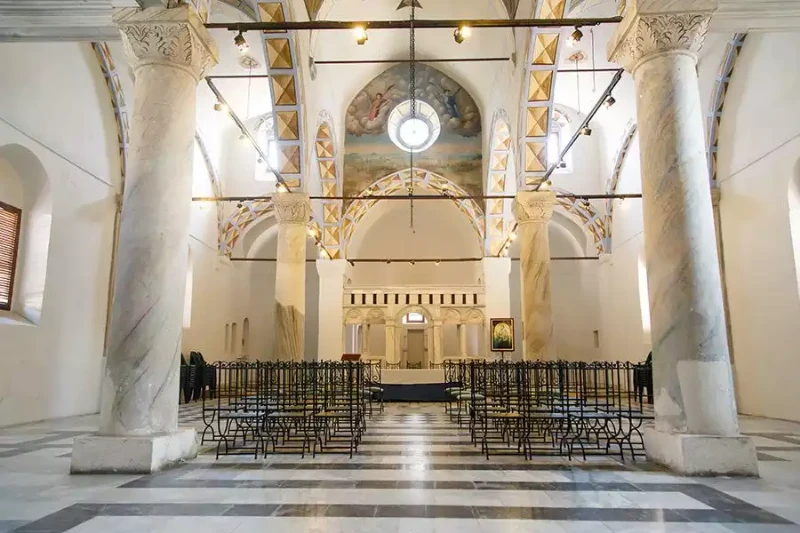
The exterior is stoic, but the interior is where the magic happens. Look up at the ceiling frescoes. You will see depictions of Jesus, the four Gospel writers (Matthew, Mark, Luke, and John), and angels. The light filtering through the windows creates a serene, almost mystical atmosphere that feels miles away from the busy city outside.
One detail you shouldn't miss is the large circular window above the altar area. It symbolizes the Divine Light illuminating the world, a fitting tribute to Paul, who spoke so often of light and revelation.
A Brief History: Who Was St. Paul?
To truly appreciate why you are standing in this Turkish city, you have to recall the story of the man. Born as Saul of Tarsus (a Roman citizen), he was initially a persecutor of early Christians.
Everything changed on the road to Damascus. After a blinding vision and a spiritual transformation, he took the name Paul and became the single most influential figure in spreading Christianity from a small Jewish sect to a global religion. The letters (Epistles) he wrote make up a huge portion of the New Testament.
Visiting Tarsus is visiting the soil that raised him.
Expert Tips for a Better Visit
I’ve visited Tarsus multiple times, and here is my honest advice to make the most of your trip:
- Respect the Heat: I cannot stress this enough. This region (Çukurova) gets incredibly hot and humid in the summer. If you are visiting in July or August, try to go very early in the morning or late in the afternoon. Mid-day sun here is unforgiving.
- Manage Expectations: As I mentioned earlier, this is a pilgrimage of significance, not necessarily of monumental scale. The Well is a small courtyard; the Church is a modest building. If you come seeking spiritual connection or historical context, you will love it. If you come expecting a massive archaeological park, you might feel underwhelmed.
- Expand Your Route: Don't just drive in for the Well and leave. Tarsus has more to offer. The Tarsus Waterfall, the Ancient Roman Road, and the Gate of Cleopatra are all nearby. You can easily fill a half-day itinerary here.
- Dress Modestly: While these are currently museums and not active mosques or churches, they are sites of religious importance. It is respectful to dress modestly (covering shoulders and knees) when visiting.
Tarsus is a quiet witness to history. It doesn't shout, but for those who know how to listen, it tells one of the most important stories of antiquity.
![Orca Whale Watching in Washington: The Ultimate [year] Guide (Seattle & San Juan Islands)](https://www.rotasenin.com/uploads/2026/01/washington-best-time-to-see-orca-whale-watching.webp)
![10 Cheapest Places for Skydiving in the World ([year] Price Guide)](https://www.rotasenin.com/uploads/2026/01/cheapest-skydiving-destinations-cuautla-mexico.webp)
![Museumplein Amsterdam: Things to Do, Museums & Events ([year])](https://www.rotasenin.com/uploads/2026/01/museumplein-amsterdam-three-museums.webp)


Comments (0)
Sign in to comment
Report