You have reached the literal end of the road on the Big Island’s northern tip. Where Highway 270 abruptly stops, one of Hawaii's most dramatic landscapes begins. Pololū Valley offers a stunning vista of verdant cliffs plunging into the crashing Pacific ocean, a view that feels like stepping back into a prehistoric era.
While many visitors simply snap a photo from the parking lot and leave, the real magic happens when you descend the switchbacks to the valley floor. However, this is not a walk in the park; it is a steep, often slippery hike that requires preparation and respect for the local culture. This guide covers the logistics of parking, trail conditions, and why you should think twice before hiking to the next valley.
- Distance: 0.6 miles (approx. 1 km) one way to the beach
- Elevation Change: \~400 feet (steep descent)
- Difficulty: Moderate (can be difficult if wet/muddy)
- Time Needed: 1 hour minimum for the hike
- Entrance Fee: Free (Parking is tight)
- Facilities: None (No restrooms, no water)
Planning Your Visit (Before You Go)
The most stressful part of visiting Pololū Valley is often the logistics. Since this is a dead-end road with high popularity, knowing where to park and what to bring will save you a headache.
Getting There & Parking
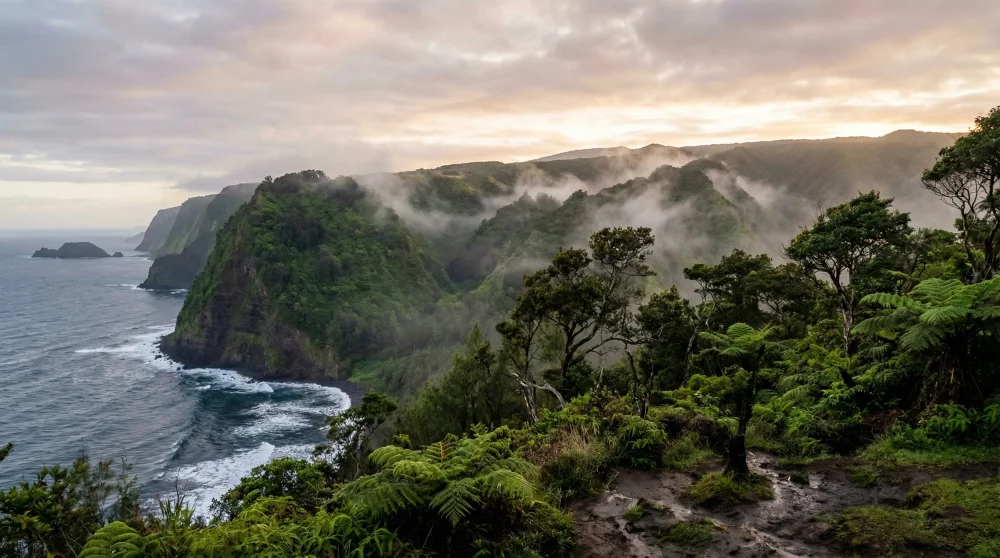
The drive itself is scenic, passing through the charming towns of Hawi and Kapaʻau. Keep driving east on Akoni Pule Highway (Hwy 270) until the pavement ends.
Parking is extremely limited. The small lot at the lookout holds only a handful of cars and is usually full by 8:00 AM. Most visitors park along the shoulder of the road. If you park on the street, ensure your car is completely off the pavement and do not block private driveways. Residents live here, and towing is enforced. If you can, arrive early (before 9:00 AM) or come later in the afternoon for sunset to avoid the midday crush.
Facilities & Cell Service
There are no restrooms at the lookout or in the valley. The nearest public restrooms are at Keokea Beach Park, about a 10-minute drive back towards Hawi. Plan your pit stop before you arrive at the trailhead.
Also, be aware that cell phone reception is spotty to non-existent at the lookout and completely dead at the bottom of the valley. Download your maps offline before you leave the hotel.
The Pololū Valley Lookout
If you have mobility issues or simply don’t have the time for a hike, the lookout offers a spectacular reward with zero effort. From the edge of the cliff, you can see the coastline stretching eastward, with the sheer cliffs of the Kohala volcano battered by waves.
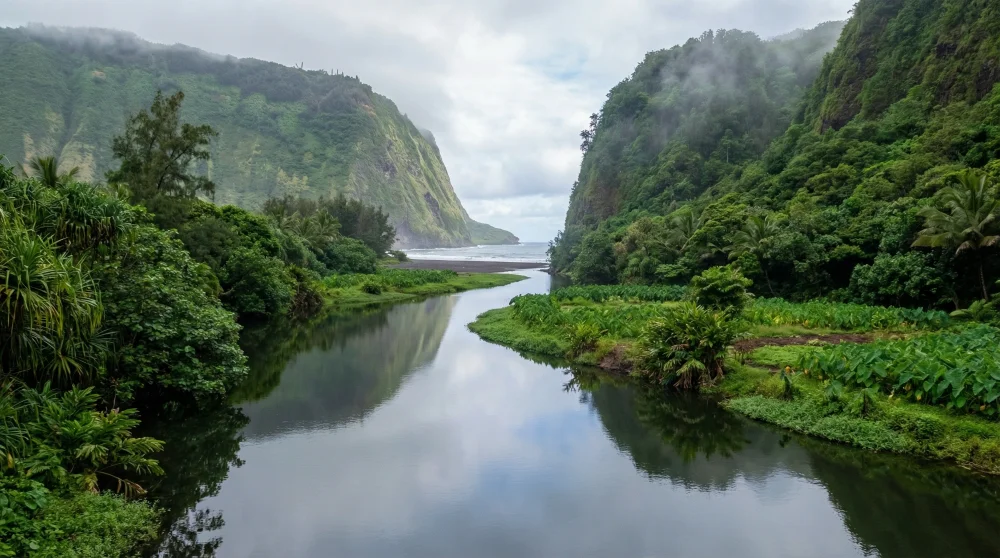
If you are visiting between December and March, this elevated vantage point is excellent for whale watching. You can often see humpback whales breaching in the deep waters off the coast without needing binoculars.
Hiking the Pololū Trail (Awini Trail)
For those ready to get their shoes dirty, the hike down is short but intense. Before you start, you will likely meet the Pololū Trail Stewards. These are community volunteers stationed at the trailhead to educate visitors about safety and the cultural significance of the valley. Please stop and listen to their advice; they have the most current info on trail conditions and weather.
Trail Difficulty & Conditions
Do not let the short distance fool you. The trail drops roughly 400 feet in just over half a mile. The path is dirt and clay, often studded with rocks and roots.
The rain factor: North Kohala is wet. If it has rained recently, this trail turns into a slick mudslide. While you might see people in flip-flops, this is a recipe for a twisted ankle. Closed-toe hiking shoes or sneakers with good grip are highly recommended.
The hike down takes about 15 to 20 minutes for most people. The hike back up is a cardio workout that will take 30 to 45 minutes, depending on your fitness level and how often you stop to catch your breath (and the view).
The Valley Floor & Black Sand Beach
Once you reach the bottom, you are greeted by a stunning black sand beach backed by ironwood trees and high dunes. The sand here is a mix of fine volcanic grains and smooth lava rocks.
Swimming Safety
The ocean here is raw and powerful. The surf is often rough, and riptides are notoriously strong and unpredictable. There are no lifeguards. Even if the water looks inviting after a sweaty hike, swimming is generally discouraged unless you are an expert swimmer familiar with Hawaiian waters. Portuguese Man o' War (jellyfish) are also common here, especially in August.
Cultural Respect & Private Property
You might read older guidebooks or blogs suggesting a hike to the next valley (Honokane Nui). Please do not do this.
The land beyond Pololū Valley is private property and contains sensitive cultural sites. The sand dunes near the beach are sacred burial grounds. You will see signs or ropes indicating where you should not walk. Please respect these boundaries (Kapu). Do not stack rocks, do not remove sand or stones, and stay on the designated paths. Enjoy the beauty of Pololū, but leave the neighboring valleys undisturbed.
Things to Do Nearby
Since the hike is relatively short, you can easily combine it with other stops in North Kohala.
- Hawi Town: A vibrant little town filled with art galleries and coffee shops. It is the perfect place to grab lunch after your hike.
- Kapaʻau: Home to the original King Kamehameha I Statue. It stands proudly in front of the North Kohala Civic Center and is a quick, history-filled stop.
- Fresh Fruit Stands: On your drive back, keep an eye out for local roadside stands selling fresh coconut, dragon fruit, and banana bread.
![10 Cheapest Places for Skydiving in the World ([year] Price Guide)](https://www.rotasenin.com/uploads/2026/01/cheapest-skydiving-destinations-cuautla-mexico.webp)
![Museumplein Amsterdam: Things to Do, Museums & Events ([year])](https://www.rotasenin.com/uploads/2026/01/museumplein-amsterdam-three-museums.webp)



Comments (0)
Sign in to comment
Report