Rome is a city best explored on foot but its sheer size means you will eventually need to use public transport. The local system is managed by ATAC and while it might seem chaotic at first glance it is actually quite logical once you know the basics.
Whether you are landing at Fiumicino or trying to get from the Colosseum to the Vatican this overview helps you move through the Eternal City like a local.
Public Transport Tickets & Passes
The public transport system in Rome is integrated. This means the same ticket works for the Metro (subway), buses, trams and a few urban train lines within the city limits. You do not need to buy separate tickets for each mode of transport unless you are traveling to the airports.

You have several options depending on how much you plan to travel. The standard single ticket is called BIT. It is valid for a limited time usually enough to get across the city. Once you validate this ticket you can change between buses and trams as much as you like within the time limit. However you can only enter the Metro turnstiles once.
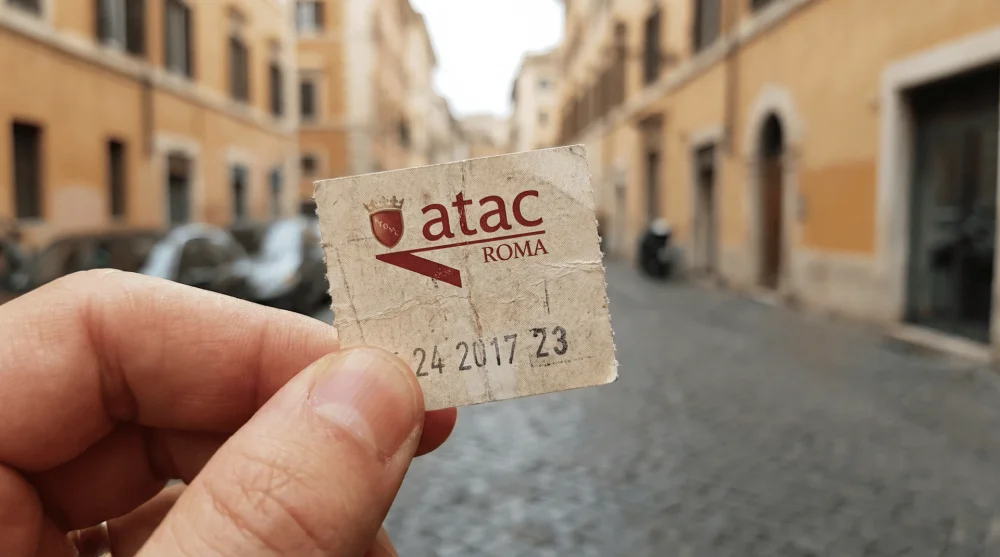
For longer stays or intensive sightseeing days look for time-based passes. There are options for 24 hours, 48 hours and 72 hours. These allow unlimited travel on all city transport from the moment of first validation. If you are staying for a week the CIS (Weekly Pass) offers the best value.
Where to Buy Tickets
- Tabacchi Shops: Look for the big T sign. These convenience stores are everywhere.
- Metro Stations: Automated machines and ticket booths are available at every stop.
- Newsstands: Many kiosks selling newspapers also stock tickets.
How to Pay: Tap & Go
Rome has modernized its payment systems significantly. You no longer strictly need a paper ticket. The Tap & Go system allows you to use your contactless credit card, debit card or smartphone (Apple Pay/Google Pay) directly at the turnstiles.
Look for the readers with the green symbol at Metro stations and on buses. Simply tap your card to enter. If you are inspected by a ticket controller you just show them the card you used. The system automatically calculates the best fare for you. If you tap enough times in a 24-hour period it caps the price at the daily pass rate so you never overpay.
Validating Your Ticket
This is the most critical rule in Rome. Buying a ticket is not enough; you must validate it.
- On Buses and Trams: Find the yellow or red machines inside the vehicle. Insert your paper ticket to get it stamped with the date and time.
- On the Metro: The turnstiles validate your ticket automatically when you enter.
If you have a paper ticket and fail to stamp it you risk a heavy fine even if you bought the ticket honestly. Keep your ticket until you completely exit the station or get off the bus.

How to Get from the Airports to City Center
Rome has two main airports and the transfer options vary significantly for each.
From Fiumicino (FCO) to Termini
Fiumicino is the main international airport. To reach Termini Station (the central hub) you have two primary choices.
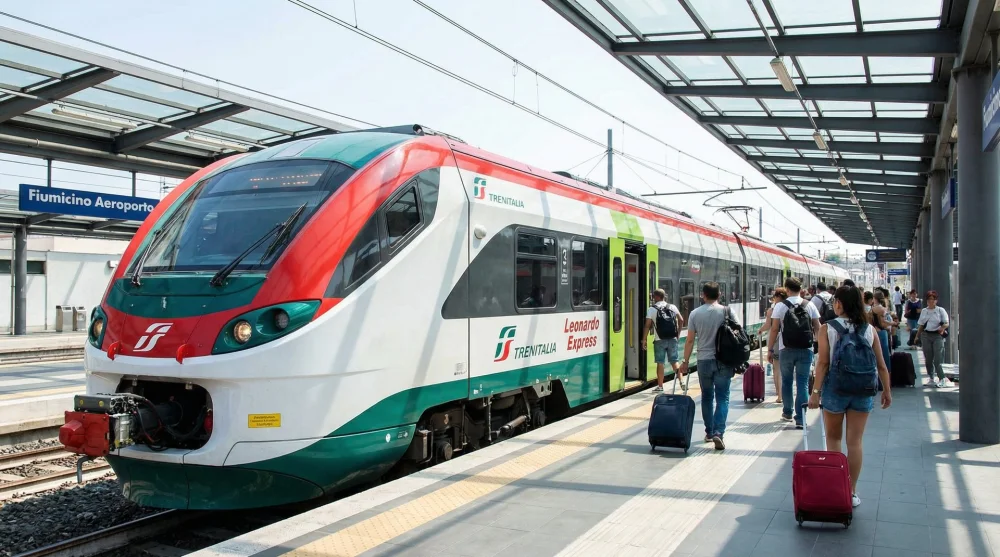
The Leonardo Express is a dedicated train that runs non-stop between the airport and Termini. It is the fastest and most reliable option as it is guaranteed to run even during public transport strikes. It is slightly more expensive but saves time.
Shuttle Buses are a budget-friendly alternative. Companies like Terravision or SitBus offer direct connections. The journey takes longer depending on traffic but it is significantly cheaper than the train. The bus stops are located just outside the arrivals terminal.
From Ciampino (CIA) to Rome
Ciampino is smaller and mostly serves low-cost airlines. There is no direct train station inside the airport.
The most convenient method is taking a Shuttle Bus directly to Termini Station. Alternatively you can take a local bus to the nearest Metro station (Anagnina - Line A) and continue your journey underground but this requires a transfer with luggage.
Navigating the Rome Metro
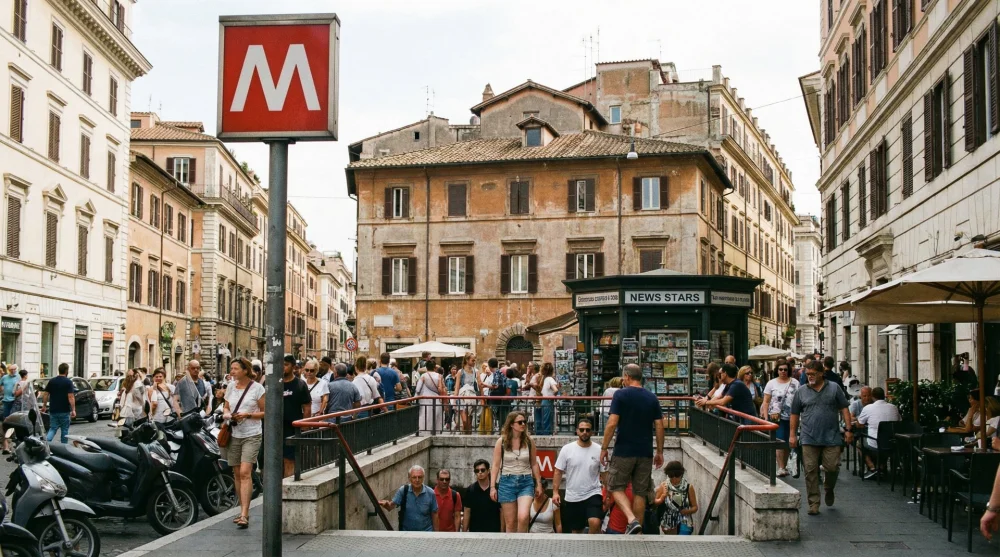
The Rome Metro is simpler than systems in London or Paris. It primarily consists of three lines that form an X shape crossing at Termini Station.
- Line A (Orange): This is the most useful line for tourists. It stops at key locations like the Vatican (Ottaviano), Spanish Steps (Spagna) and Trevi Fountain (Barberini).
- Line B (Blue): This line takes you to Ancient Rome. Key stops include the Colosseum (Colosseo) and Circus Maximus (Circo Massimo).
- Line C (Green): This is a newer automated line that serves the suburbs and connects with Line A at San Giovanni.
Metro Operating Hours
The Metro starts running early in the morning around 05:30. On weekdays it closes late at night. On Fridays and Saturdays the service extends even later into the night to accommodate weekend crowds. Always check the station signs for the exact last train times during your visit.
Buses & Trams in Rome
The Metro does not reach the historic center's winding medieval streets. For areas like Piazza Navona, Campo de' Fiori or the Trastevere neighborhood you will rely on buses.
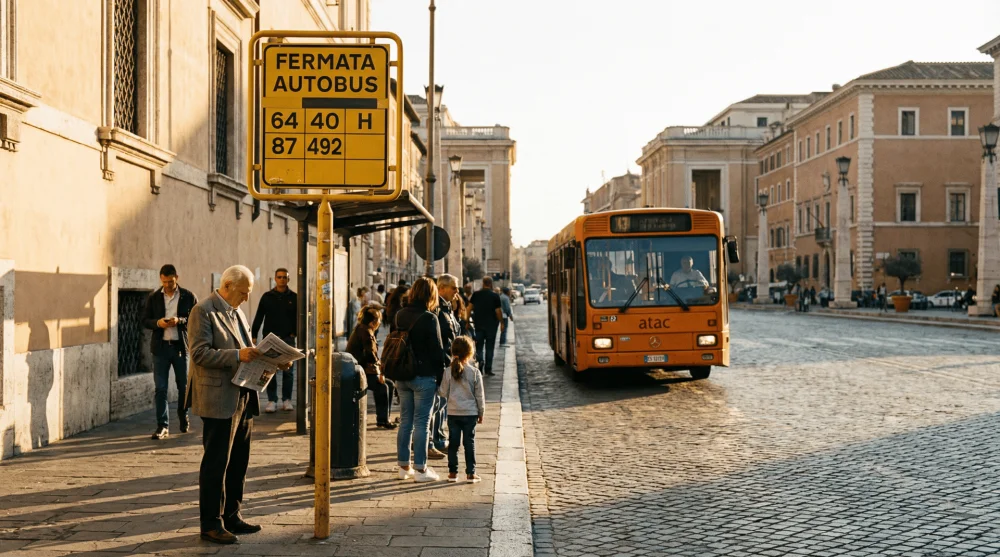
Bus stops are marked with yellow signs listing the route numbers and stops. The electronic displays at popular stops show real-time arrival estimates.
Night Buses (N Lines)
When the Metro closes Rome does not sleep. The Night Buses take over. Stops for these buses are marked with an owl symbol and the bus numbers start with the letter N. They follow the main routes of the Metro and major bus lines ensuring you can get back to your hotel safely after a late dinner.
Taxis & Ride-Sharing Apps
Using a taxi in Rome works differently than in many other major cities.
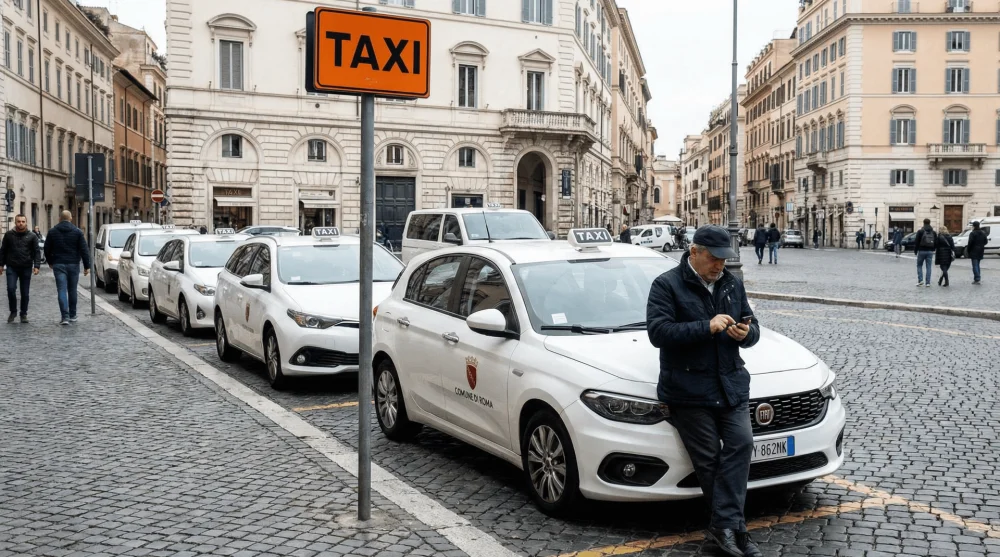
Important Rule: You cannot simply hail a taxi on the street. Raising your hand at a passing cab will usually result in the driver ignoring you. You must go to a designated Taxi Rank (orange signs marked TAXI) or call one.
Ride-Sharing: Standard Uber (UberX) does not operate in Rome in the same way it does in the US. The app only connects you to Uber Black or Uber Van services which are luxury vehicles with professional drivers and higher rates.
For a standard taxi experience via an app use FreeNow. It connects you with official white taxis and allows you to pay through the app avoiding language barriers or payment disputes.
Essential Apps for Transport
To navigate the city smoothly download these apps before you arrive:
- Google Maps: Reliable for walking directions and general bus routes.
- Moovit: Often provides more detailed public transport combinations and real-time alerts.
- Probus: excellent for checking real-time waiting times for specific bus stops.
- FreeNow: The best way to order a standard taxi.
Rome Transport Safety Tips
Rome is generally safe but public transport is a hotspot for pickpockets especially on crowded routes.
- Watch Route 64: This bus connects Termini to the Vatican and is infamous for pickpockets because it is always packed with tourists.
- Keep Bags Close: Wear backpacks on your front when on the Metro or bus.
- Strike Action (Sciopero): Transport strikes occur occasionally in Italy. They are usually announced in advance and often have guaranteed operation windows during rush hours. Check local news or ATAC's website if you see strike warnings.


![Seychelles Trip Cost: Detailed Budget Breakdown [year]](https://www.rotasenin.com/uploads/2026/02/self-catering-guesthouse-tropical-garden-veranda.webp)
![Best Rides at Disney's Animal Kingdom: Ranked & Reviewed [year]](https://www.rotasenin.com/uploads/2026/02/avatar-flight-passage-banshee-ride.webp)
![Rome Pantheon Visiting Tips: Entry Fee, Hours & The Oculus [year]](https://www.rotasenin.com/uploads/2026/02/tourist-queue-ticket-line-piazza-della-rotonda.webp)
Comments (0)
Sign in to comment
Report