For centuries, walking into the Pantheon was as simple as strolling across the piazza and stepping through the bronze doors. That changed in July 2023. Now, you need a ticket to enter the best-preserved building of ancient Rome.
Don't let this discourage you. The Pantheon remains the single most impressive architectural feat in the city. It stands as a bridge between the pagan Roman Empire and the modern Christian city, holding the tombs of kings and artists beneath its massive unreinforced concrete dome.
Here is how you navigate the new ticket system, beat the crowds, and understand what you are looking at.
- Entry Fee: €5 (Cash or Card options vary by line)
- Visiting Hours: 09:00 – 19:00 (Last entry at 18:30)
- Dress Code: Strict (Shoulders and knees must be covered)
- Best Time: Before 10:00 or after 17:00 to avoid the tour groups.
How to Buy Tickets & Skip the Line
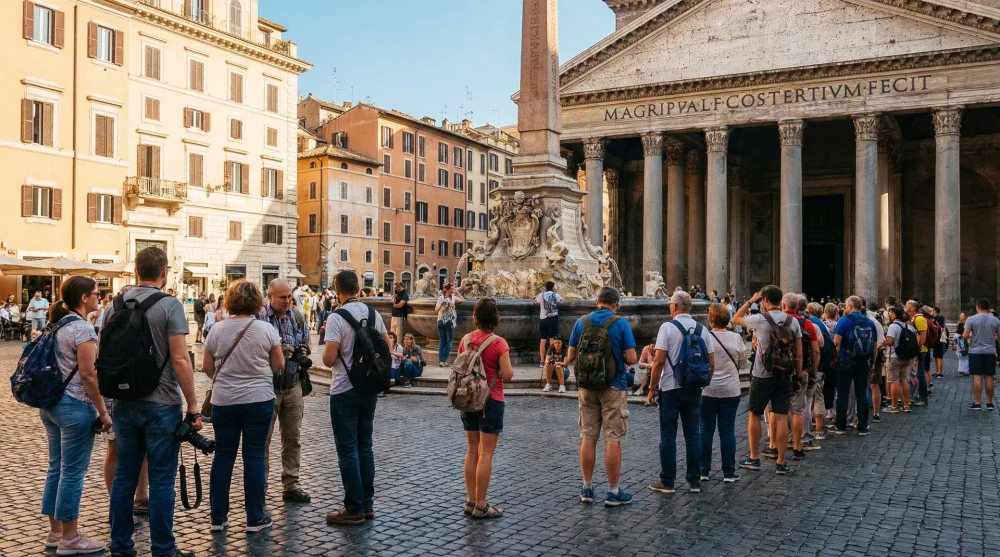
The situation in Piazza della Rotonda often confuses first-time visitors because there are usually two or three different lines snaking around the fountain.
- The Cash Only Line: Often shorter. If you have cash (Euros) on hand, look for the signage indicating cash payments. You buy your ticket at the desk inside.
- The Card/Online Line: This line is typically longer because most tourists try to pay with cards or are picking up pre-booked tickets.
- Online Booking: You can book via the official Ministry of Culture website, but be aware that slots sell out weeks in advance during high season.
Local Tip: If the lines look unbearable, grab a coffee at Tazza d'Oro nearby and wait. The queues often drop significantly during lunchtime (13:00-14:00).
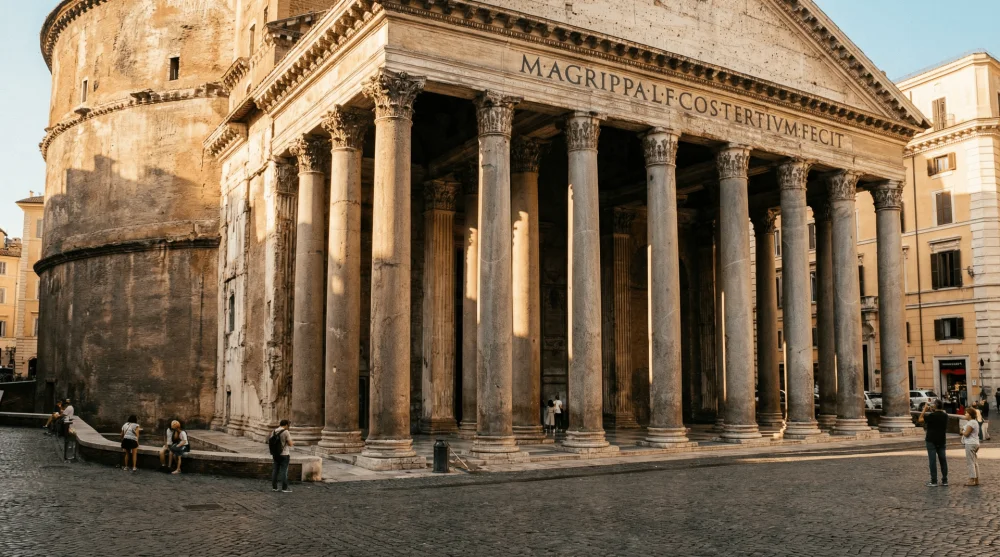
The Architecture: A 2,000-Year-Old Miracle
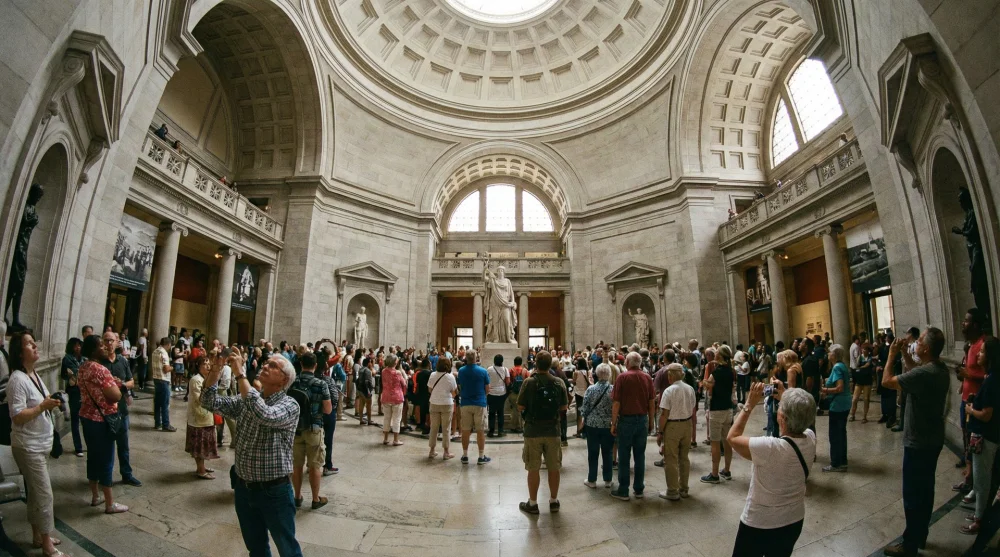
When you step inside, your eyes immediately go up. You are looking at the largest unreinforced concrete dome in the world. It has held this record for nearly 2,000 years.
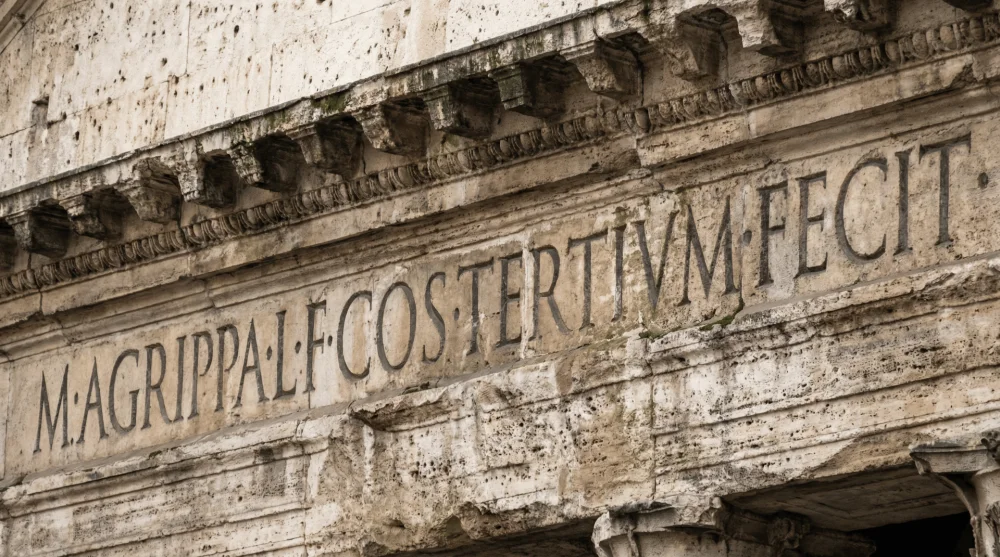
Emperor Hadrian rebuilt the structure around 126 AD (after previous fires destroyed the versions by Agrippa). The inscription on the triangular pediment outside, M·AGRIPPA·L·F·COS·TERTIVM·FECIT, attributes the building to Marcus Agrippa, a gesture of respect from Hadrian to his predecessor.
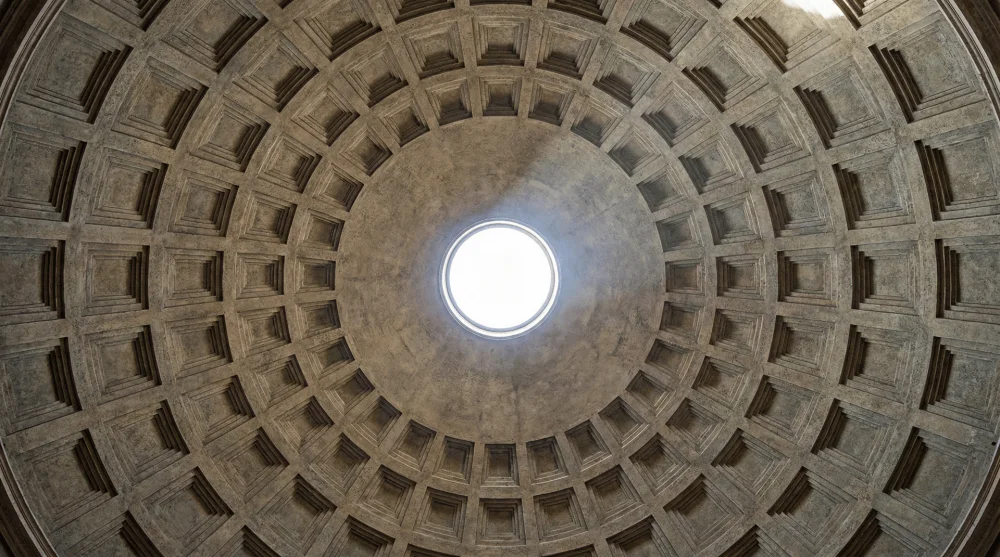
The Oculus: The Eye of Rome
The center of the dome features a 9-meter wide opening called the Oculus. It is the building's only source of natural light.
- Does it rain inside? Yes. When it rains in Rome, it rains in the Pantheon.
- Why doesn't it flood? Look closely at the floor. The center is slightly convex (curved upward), and there are small drain holes hidden in the marble patterns. The water drains away naturally.
Tombs of Kings and Masters
The Pantheon is not just a former temple; it is a mausoleum.
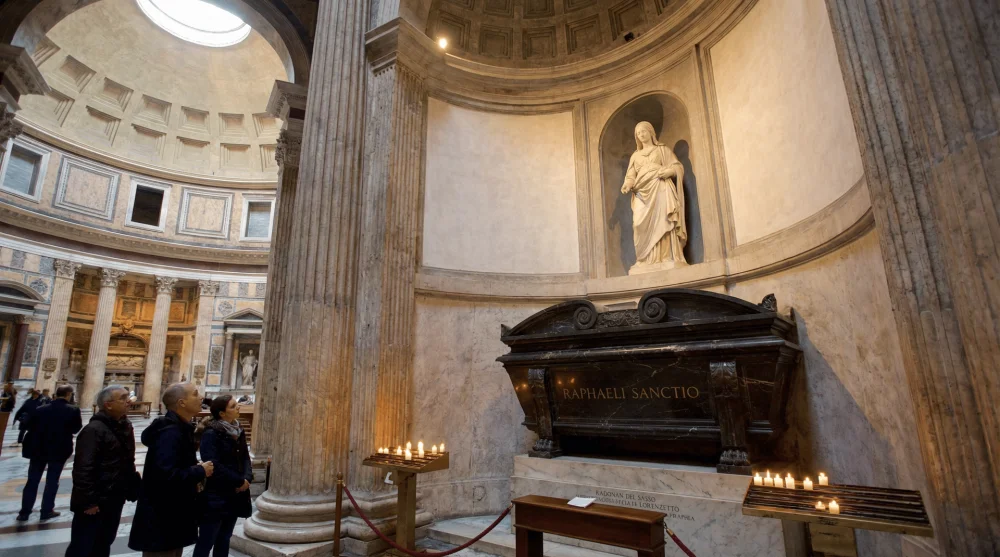
- Raphael: The Renaissance master painter is buried here in a marble sarcophagus. The inscription translates to: Here lies that famous Raphael by whom Nature feared to be conquered while he lived, and when he was dying, feared herself to die.
- The Kings of Italy: You will see the massive tombs of Vittorio Emanuele II (the first king of unified Italy) and Umberto I, along with Queen Margherita (yes, the inspiration for the pizza).
Pro Tip: If you love Renaissance art and history, combine this visit with the vatican museums, where you can see Raphael's most famous frescoes, The School of Athens.
The Dress Code Is Real
Since the Pantheon is a consecrated church (Basilica of Santa Maria ad Martyres), the staff enforces a strict dress code.
- No tank tops or sleeveless shirts.
- No short shorts or miniskirts.
- Hats off for men.
If you are visiting in summer and wearing light clothes, carry a scarf or shawl in your bag to wrap around your shoulders before entering. They will turn you away if you are not covered.
The Fountain and The Square
Before or after your visit, take a moment in Piazza della Rotonda. The fountain in the center, designed by Giacomo Della Porta, supports an Egyptian obelisk of Ramses II.
This square is the living room of Rome. While the restaurants directly facing the Pantheon are pricey, the view is unbeatable. For a more authentic experience, explore the side streets toward the imperial forums rome to see how the ancient city layers connect.
![Seychelles Trip Cost: Detailed Budget Breakdown [year]](https://www.rotasenin.com/uploads/2026/02/self-catering-guesthouse-tropical-garden-veranda.webp)
![Best Rides at Disney's Animal Kingdom: Ranked & Reviewed [year]](https://www.rotasenin.com/uploads/2026/02/avatar-flight-passage-banshee-ride.webp)

Comments (0)
Sign in to comment
Report