Waipiʻo Valley is easily one of the most raw and spectacular landscapes on the Big Island, but visiting it has changed drastically in recent years. The days of driving your rental Jeep down the steep access road are over. Today, this experience requires planning, physical fitness, or a reservation.
If you are standing at the top wondering if you can go down, or planning your trip to the Hamakua Coast, this guide breaks down exactly how to handle the road closure, the steep hike, and what to expect on the valley floor.
- Road Status: Closed to visitors (pedestrians allowed, vehicles restricted).
- Access: Steep hike or local shuttle tour.
- Elevation Loss: \~800 feet in 0.6 miles (Avg 25% grade).
- Facilities: Restrooms at the lookout; portable toilets occasionally at the bottom (bring your own toilet paper).
- Cell Service: Zero signal in the valley or at the lookout. Download offline maps.
The Current Situation: Is Waipiʻo Valley Road Closed?
Yes, the Waipiʻo Valley Access Road is closed to all non-residents and rental vehicles. This is strictly enforced. You will find a guard station at the top of the road, and they will turn you away if you try to drive down in a rental car or private vehicle without a resident ID.
This closure was implemented due to geotechnical hazards (rockfalls and road instability) and to respect the sacred nature of the valley, which is home to local residents and ancestral burial grounds.
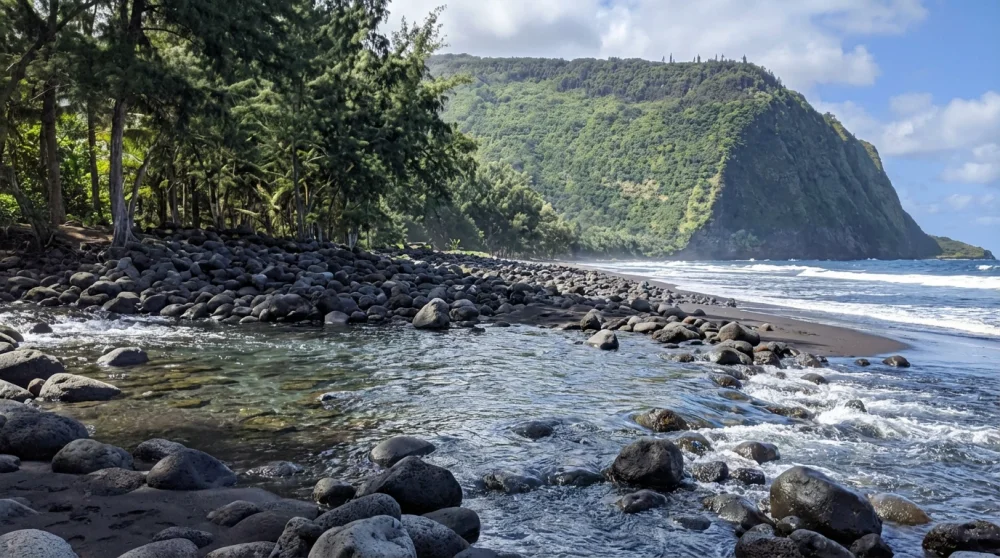
Important Warning: Even if the guard is not there, do not attempt to drive down. Most rental car contracts explicitly list this road as a prohibited area. Driving here voids your insurance, and if you get stuck or damage the car on the 40% grade curves, you are on your own with a massive towing bill.
How to Get Down to the Valley Floor
Since you cannot drive, you have two options to reach the black sand beach: walking or booking a local tour.
Option 1: The Hike (The Cardio Challenge)
You can legally walk down the access road. However, do not underestimate this walk. It is less of a hike and more of a steep pavement walk.
- The Descent: It takes about 30 to 45 minutes to walk down. The road is extremely steep (up to 40% grade in sections). It is hard on the knees and shins.
- The Ascent: This is the brutal part. Walking back up takes 1 to 1.5 hours depending on your fitness. It is a relentless, vertical climb with no flat sections to recover until you reach the top.
- Safety: The road is narrow. You must share it with resident vehicles and tour vans. Always yield to vehicles, especially those coming uphill, as they cannot stop their momentum. Stay on the side of the road.
Recommendation: Only attempt this if you are in good physical shape and have water with you. We have seen many fit people struggling severely on the way up in the midday sun.
Option 2: Waipiʻo Valley Shuttle & Tours
If you want to see the valley floor without the exhaustion, your only option is a guided tour. Several local operators run 4WD van shuttles that are authorized to use the road.
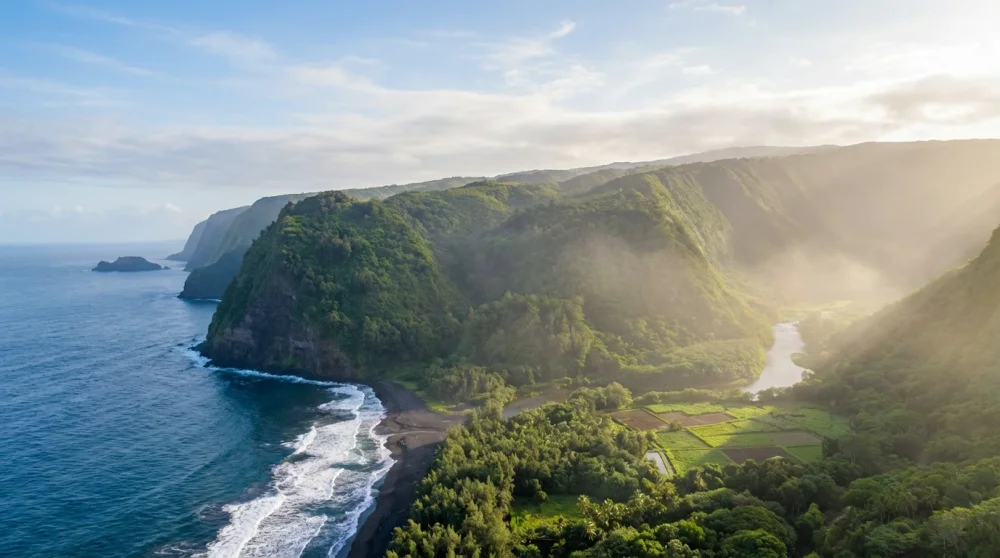
- Benefits: You get history lessons from local guides, access to the back of the valley (which is too far to walk for most day-trippers), and a ride back up the hill.
- Booking: Tours fill up fast. You should book this at least a week in advance.
Exploring the Valley Floor
Once you reach the bottom of the road, the scenery changes from steep cliff to lush jungle. The area is quiet, filled with taro patches and wild nature.
The Black Sand Beach
At the bottom of the hill, taking a right turn leads you toward the ocean. The beach is split by the Wailoa Stream.
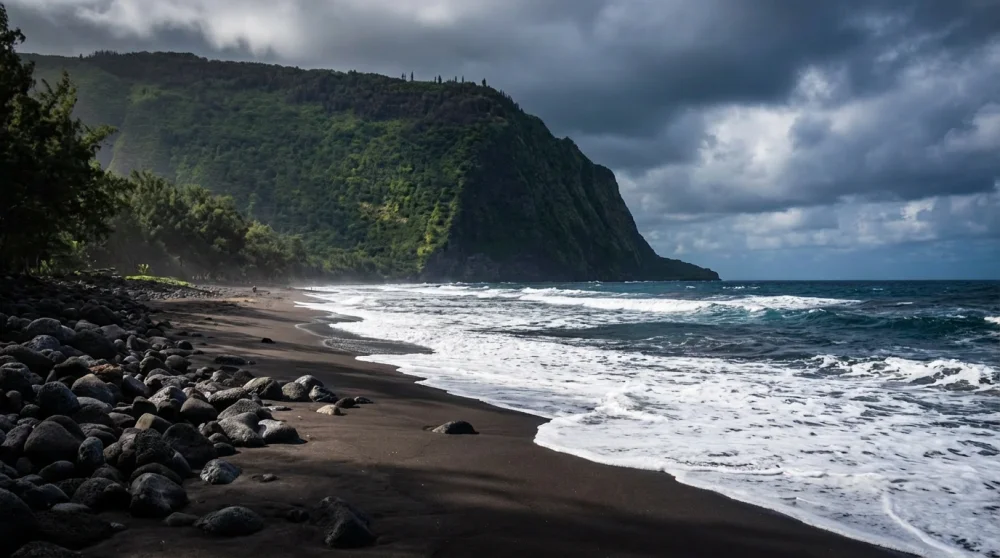
- River Crossing: To get to the expansive sandy section of the beach, you usually have to cross the stream. Depending on the rainfall, this can be ankle-deep or waist-deep. Check the flow before crossing. If the water looks fast or brown (muddy), do not cross.
- Swimming: This is not a swimming beach. The currents here are incredibly strong and the waves are unpredictable. Enjoy the view, dip your toes in, but stay close to the shore.
Wild Horses
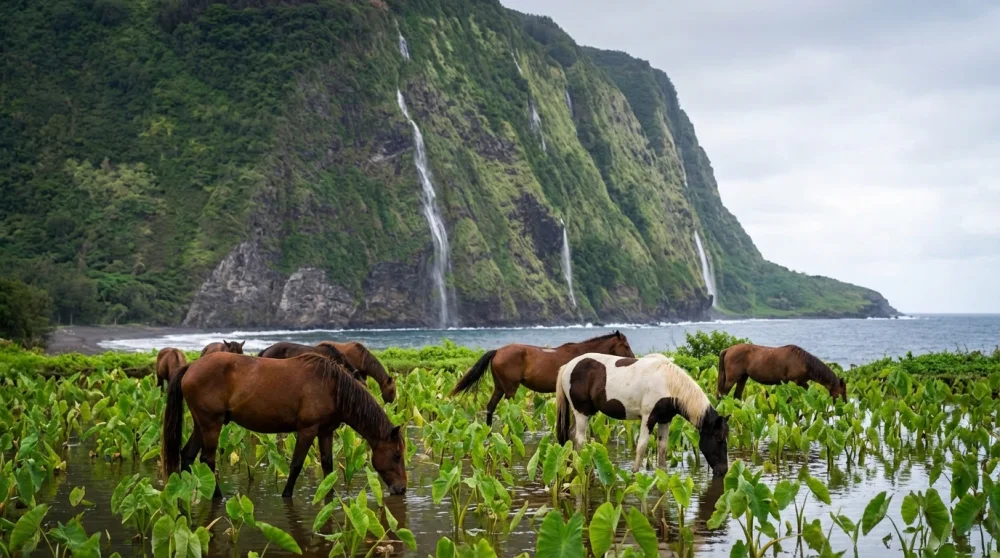
You will likely see wild horses roaming the valley floor or the beach. They are beautiful, but they are wild animals. Do not feed or touch them. Visitors have been bitten or kicked when getting too close. Admire them from a distance.
Hiʻilawe Falls
This is one of the tallest waterfalls in Hawaii. You can see it from the road as you descend into the valley. Do not hike to the base of the waterfall. The trail crosses private property, and residents are very protective of their land rights. The best view is from the public access road or the beach area.
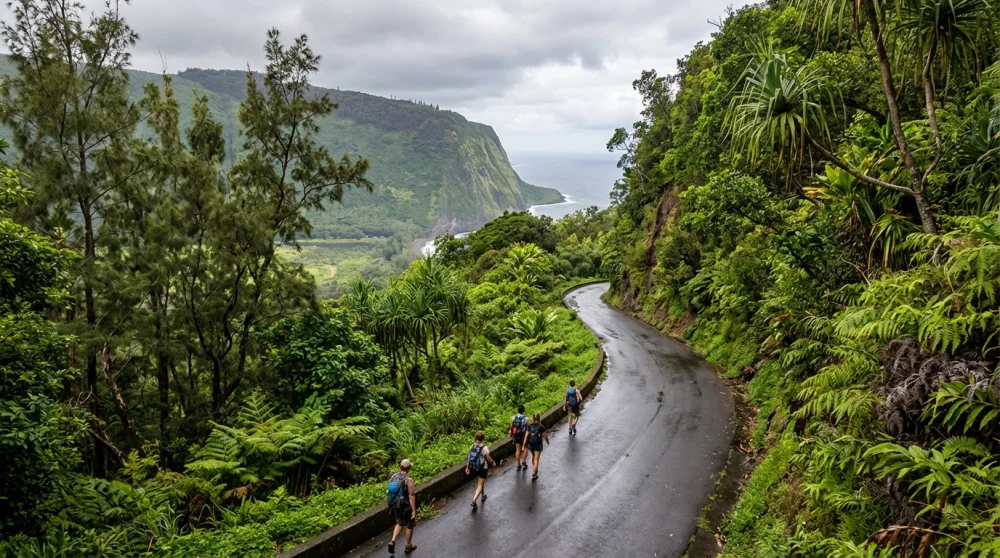
The Lookout (For Non-Hikers)
If you are not up for the steep hike and didn't book a tour, the Waipiʻo Valley Lookout is still worth the drive.
- The View: You get a panoramic view of the cliffs, the black sand beach, and the agricultural patches below. It is one of the best photo spots on the Big Island.
- Parking: The parking lot is small and often full. You may need to park carefully on the side of the road leading up to the lookout.
- Picnic: There is a small grassy area with picnic tables. It is a great spot to eat lunch if the weather is clear.
Essential Tips for Respectful Visits
Waipiʻo is known as the Valley of the Kings and is deeply sacred to Native Hawaiians.
- Stay on the Road: Do not wander into taro patches or driveways. People live here.
- Pack It Out: There are no trash cans in the valley. Take all your trash back up with you.
- Restroom Planning: Use the restrooms at the lookout before you descend. The facilities at the bottom are often just basic portable toilets and are not guaranteed to be stocked.
- Weather: It rains frequently here. The road becomes slippery when wet. If it starts raining heavily while you are at the bottom, head back toward the road immediately as flash floods can occur in the river.
![10 Cheapest Places for Skydiving in the World ([year] Price Guide)](https://www.rotasenin.com/uploads/2026/01/cheapest-skydiving-destinations-cuautla-mexico.webp)
![Museumplein Amsterdam: Things to Do, Museums & Events ([year])](https://www.rotasenin.com/uploads/2026/01/museumplein-amsterdam-three-museums.webp)


Comments (0)
Sign in to comment
Report